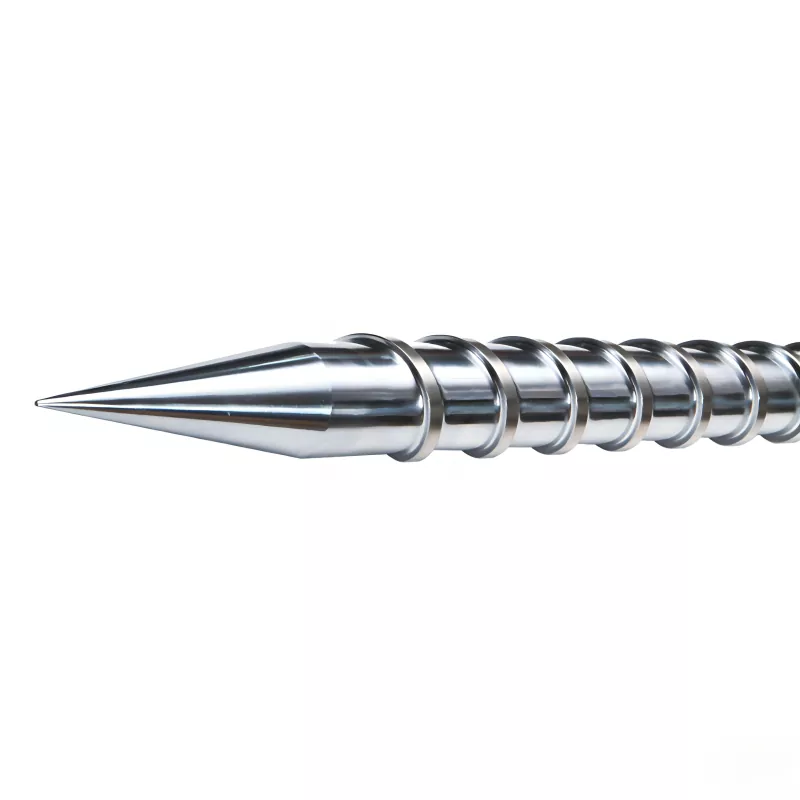
PVC Special Screws and Barrels
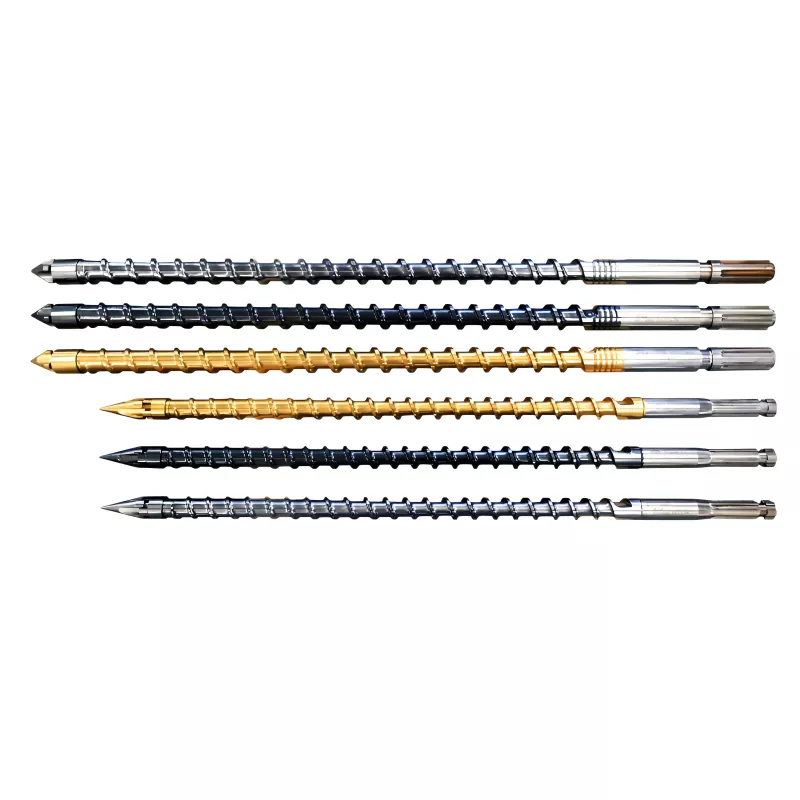
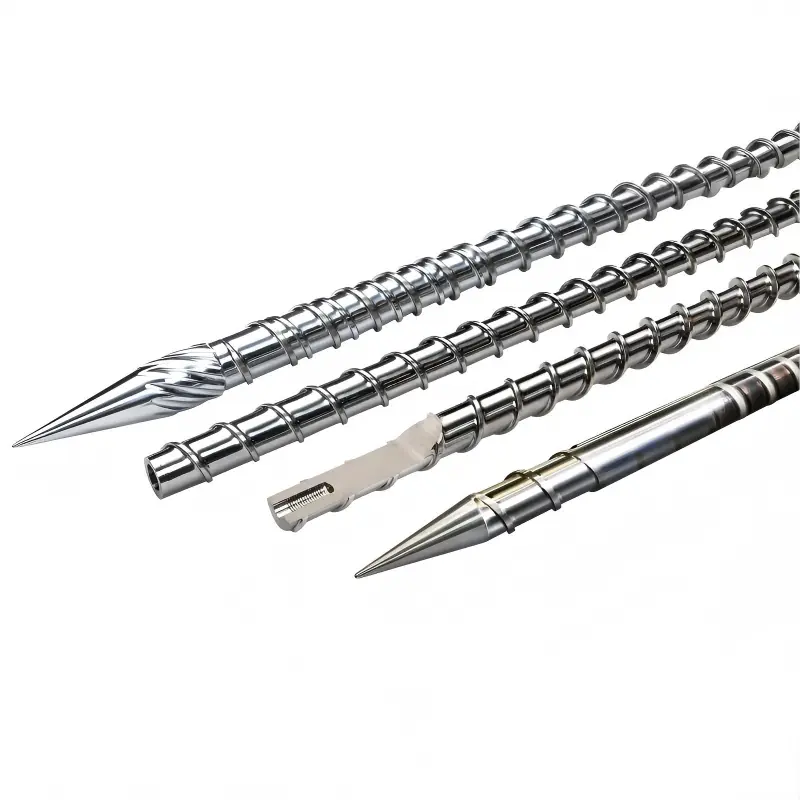
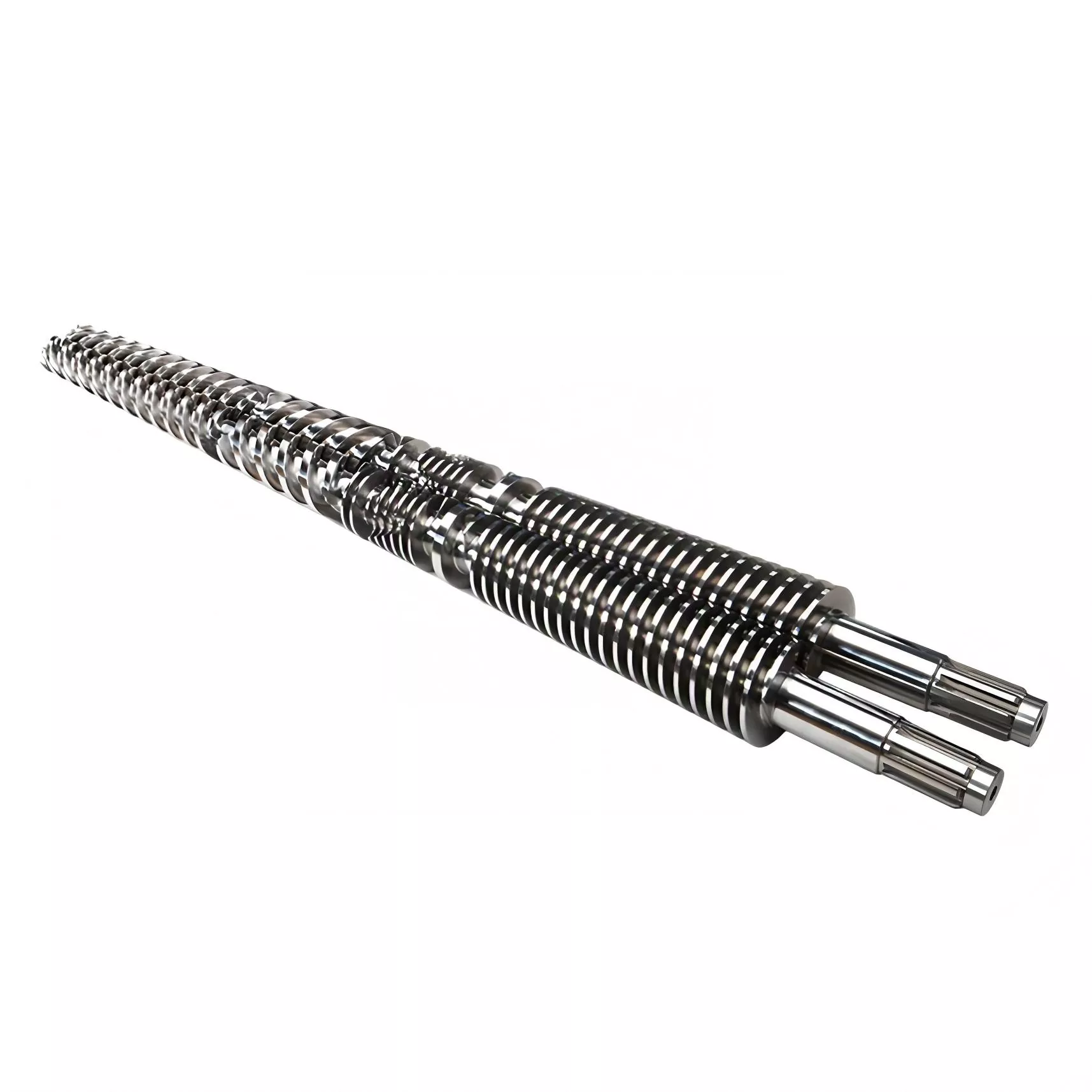
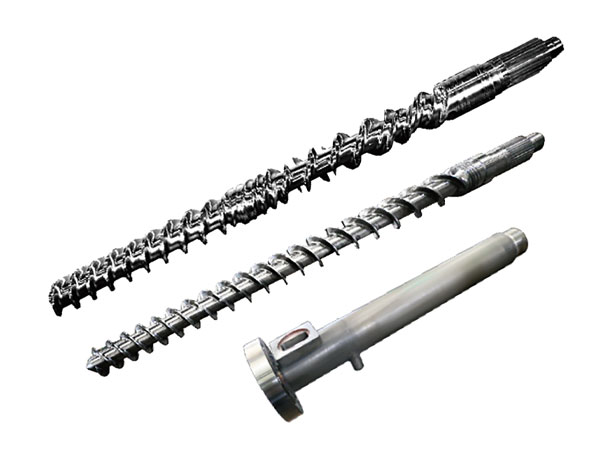
For international plastics manufacturers looking to eliminate acid pitting, stop localized material yellowing, and maintain rigid profile wall tolerances, installing a premium PVC Special Screws and Barrels assembly provides an engineered solution. Tailored specifically to counter the aggressive corrosive outgassing and abrasive high-filler loads of PVC compounding, HAPPY PLASTICS’s twin-screw assemblies reduce thermal degradation rejects by up to 42% while protecting structural tolerances across high-output pipe, sheet, and profile lines.
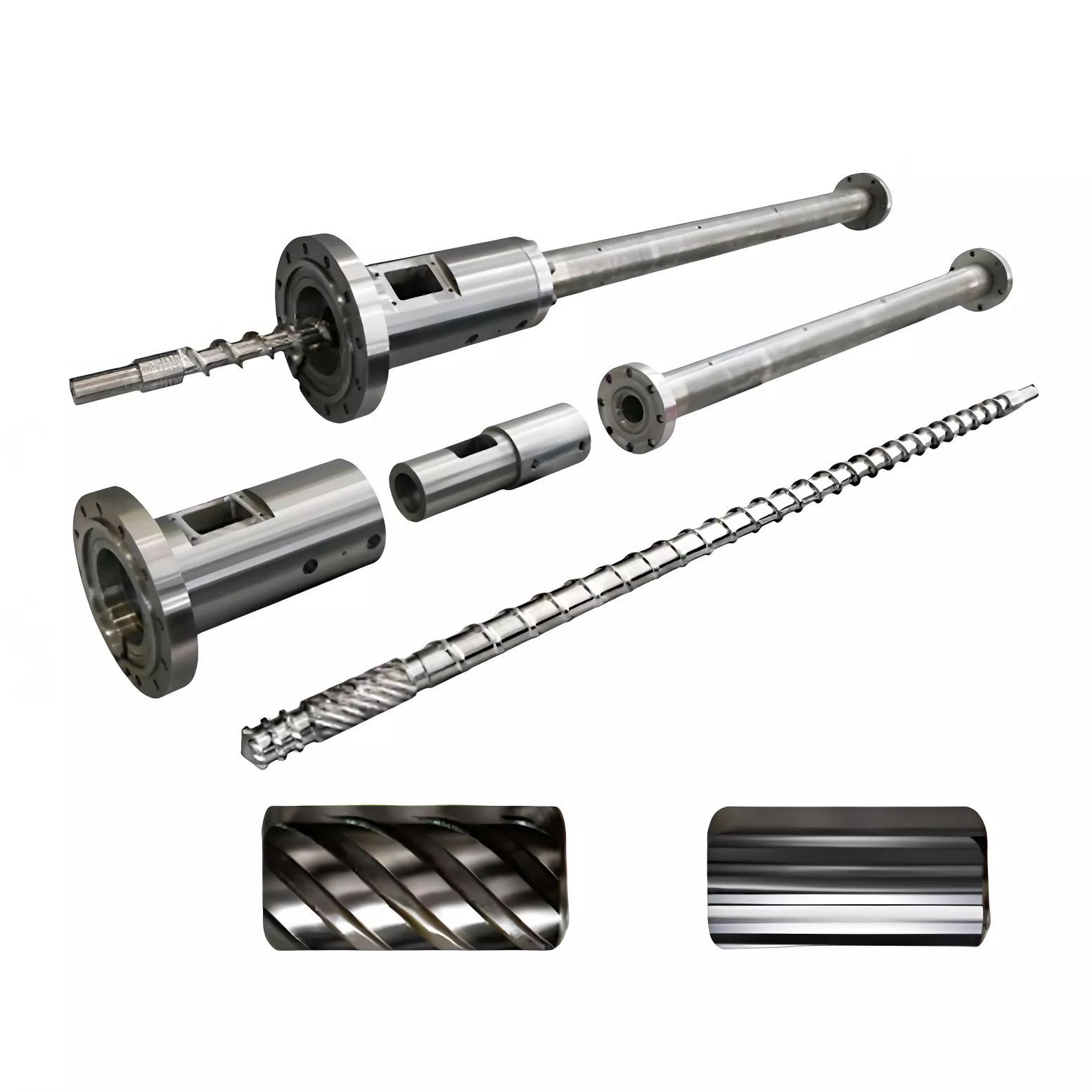
Partnering with a specialized China PVC Special Screws and Barrels manufacturer HAPPY PLASTICS, gives your plant the metallurgical defenses needed to process rigid and flexible vinyl safely. We utilize advanced multi-axis CNC milling, high-density bimetallic centrifugal sleeve casting, and mirror-surface polishing to handle the unique challenges of PVC processing—including hydrogen chloride gas corrosion and heavy calcium carbonate (CaCO₃) abrasion. Whether you operate high-torque conical twin-screw or parallel twin-screw extruders, our assemblies secure a completely homogeneous melt without localized overheating.
Defining the PVC Degradation Challenge and Our Design Response
PVC is highly heat-sensitive; if the polymer melt experiences localized shearing or dead spots, it releases highly corrosive hydrogen chloride (HCl) gas, which destroys standard nitrided steel within months. A dedicated PVC Special Screws and Barrels system relies on precise chemical defense and low-shear processing geometry:
[1. Low-Shear Deep Flight Profile] ➔ [2. Multi-Zoned Air/Oil Cooling] ➔ [3. Hyper-Gloss Flow Channel Polishing]
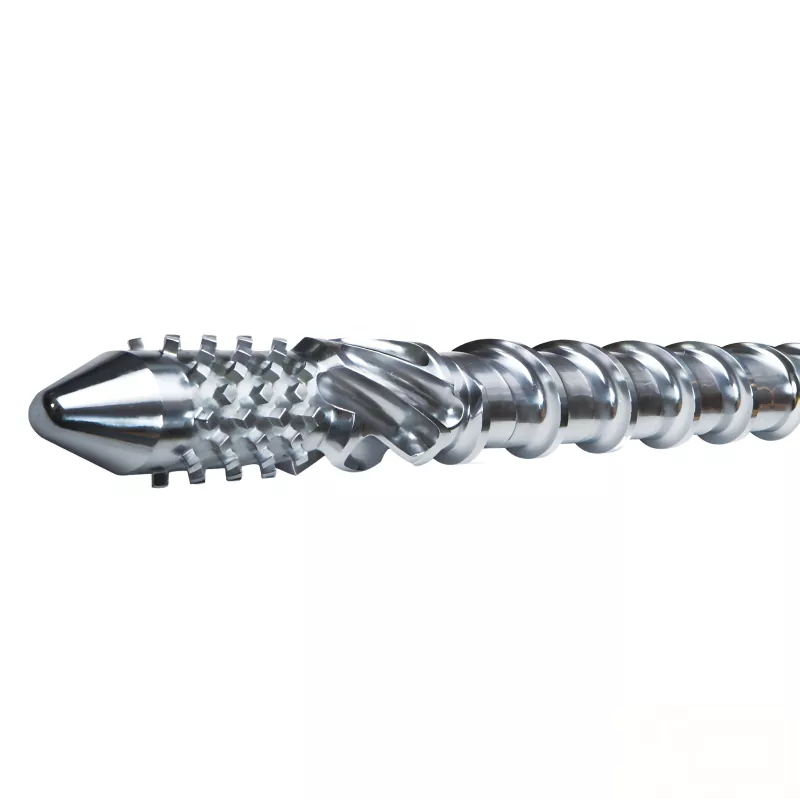
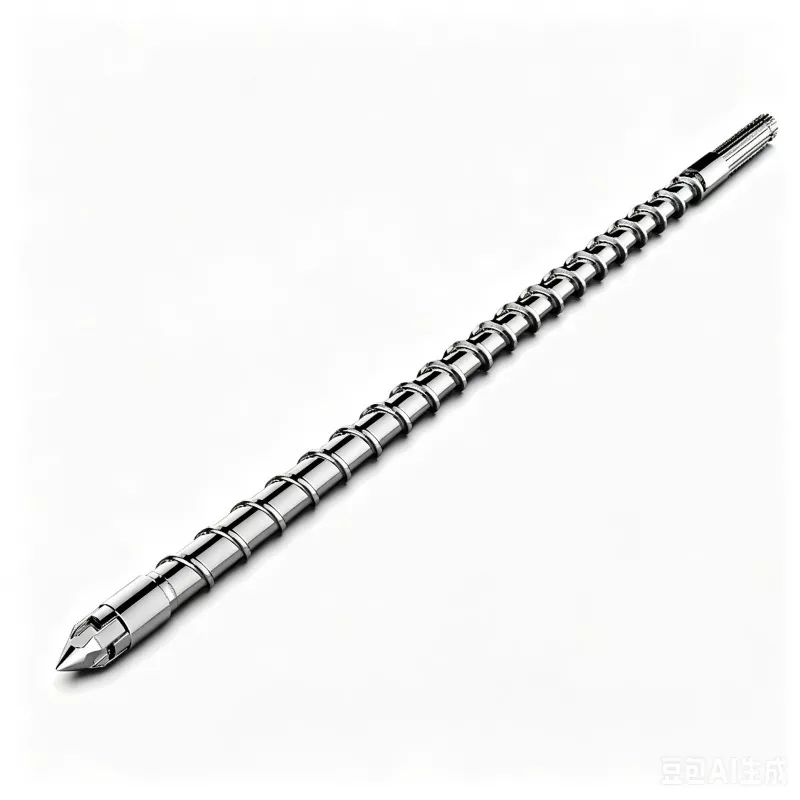
• Low-Shear Deep Flight Profile: The screw compression ratio is balanced to knead the material uniformly rather than shearing it, ensuring complete plasticization without crossing the thermal decomposition threshold.
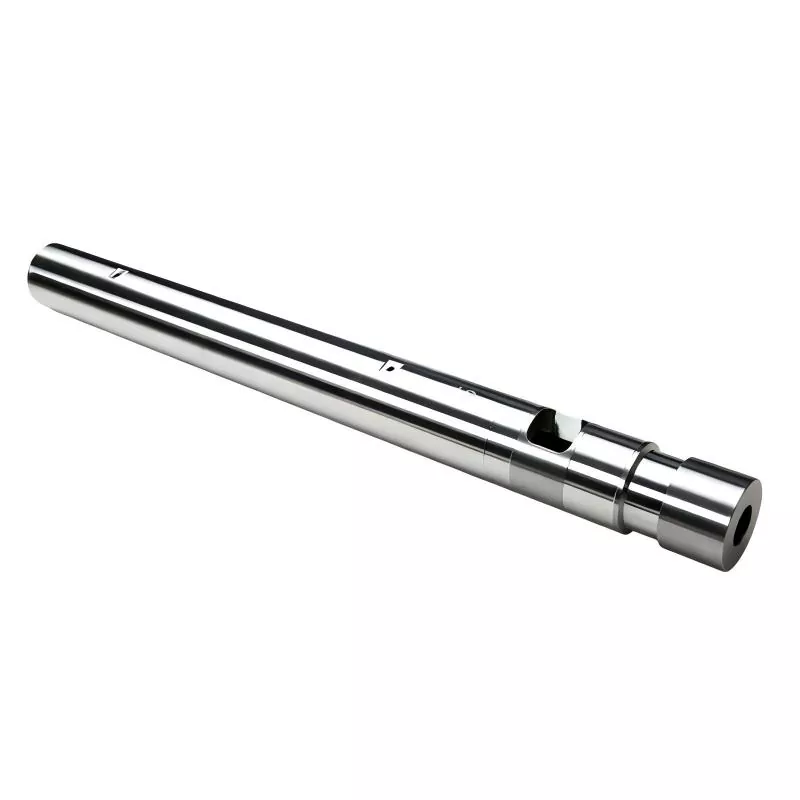
• Multi-Zoned Air/Oil Cooling: The barrel body features deeply finned cooling zones paired with automated fan or forced-oil circulation systems, dropping temperatures instantly if shear heat spikes.
• Hyper-Gloss Flow Channel Polishing: All contact surfaces are buffed to a mirror finish (Ra ≤ 0.15μm) to remove the micro-scratches where PVC compound could lodge, char, and flake into the extruded product as black specks.
Targeted Metallurgy Matrix
To combat the combined forces of chemical corrosion and the heavy abrasive scraping of calcium carbonate (CaCO₃) or titanium dioxide (TiO₂) fillers, we implement a tiered metallurgical structure:
|
Component Zone |
Primary Destruction Risk |
Base Material Choice |
Applied Surface Protection Layer |
Minimum Layer Hardness |
|
Screw Flight Crests |
Intense mechanical abrasive scouring |
Cr-Mo-V Structural Steel |
Plasma Transferred Arc (PTA) Ni-Co-Tungsten Carbide Matrix |
58 - 62 HRC |
|
Barrel Internal Liner |
Acid corrosion & micro-pitting |
Carbon Steel Outer Jacket |
Centrifugally Cast High-Chrome Ni-Mo-Fe Bimetallic Sleeve (3.0mm thickness) |
60 - 64 HRC |
|
Screw Core/Flanks |
Hydrogen Chloride (HCl) gas exposure |
Premium Nitrided Steel |
High-Gloss Chrome Plating / Multi-Layer Duplex Nitriding |
≥ 950 HV |
Versatile Application
Our custom PVC Special Screws and Barrels dimensions (ranging from Φ45mm to Φ135mm and larger) are optimized for specific market deliverables:
• Rigid Window Profiles & Trims: Designed to manage high-filler CaCO₃ loads while ensuring clean, high-gloss surface finishes on exterior multi-hollow frames.
• Heavy-Duty Infrastructure Piping: Engineered to maintain high head pressures for thick-walled water mains, conduits, and corrugated drainage pipes without volumetric output surging.
• Foam Boards & Rigid Sheets: Screw geometries are tailored to distribute foaming agents uniformly through the melt matrix, ensuring consistent core densities and cell structures.
Factory Verification, Quality Protocols, and Mechanical Precision
Every PVC Special Screws and Barrels set leaves our facility with a fully certified testing log to ensure perfect drop-in mechanical alignment on your manufacturing floor:
• Digital Laser Alignment Checks: The straightness of the twin barrel bores is tracked via internal laser tracking devices to keep linear deviation below 0.02mm per meter.
• Conjugate Clearance Audits: Interlocking twin-screw flights are checked across their entire length to maintain strict, uniform clearances, preventing localized material stagnation or back-leakage.
• 12-Month Structural Protection: We provide a comprehensive 12-month structural warranty against manufacturing defects, body cracking, or premature bimetallic alloy delamination.
FAQ
Q: Why are we getting persistent yellowing and black lines in our rigid PVC profiles?
A: Internal yellowing is a sign of thermal degradation, meaning the PVC compound is overheating or stagnating inside the machine. This usually happens if the screw clearance is worn out, allowing material to slip backward and cook, or if there is a dead zone at the barrel-to-adapter joint. Switching to a co-engineered PVC Special Screws and Barrels set ensures tight clearances and a polished, streamlined flow path that completely eliminates stagnant material traps.
Q: Can your engineering team configure a matching screw set if we are transitioning our line from a lead-based stabilizer to a calcium-zinc (Ca-Zn) system?
A: Yes. Ca-Zn stabilized formulations exhibit different melting behaviors, higher visco-elastic resistance, and lower thermal stability windows than older lead-salt compounds. If you are modifying your recipe, our engineering team will adjust the screw compression ratios and mixing zone spacing to ensure proper material fusion without adding extra shear heat.
Q: What is the benefit of a centrifugally cast bimetallic barrel over a traditional nitrided barrel for PVC?
A: Gas nitriding only creates a thin, hardened surface layer (0.5mm deep). Once the abrasive fillers in your PVC compound score through this layer, the soft base steel underneath erodes rapidly from acid corrosion. A bimetallic barrel features a thick (3.0mm), centrifugally cast alloy sleeve that provides consistent corrosion and wear resistance through its entire depth, extending operational life by up to 3 to 5 times.
Hot Tags: PVC Special Screws and Barrels Manufacturer, PVC Special Screw Supplier, Custom PVC Barrel and Screw
Send Inquiry
Contact Info
-
Address
No. 217, Qiaoxing East Road, Dafeng, Jintang Town, Dinghai District, Zhoushan City, Zhejiang Province, China
-
Tel
-
For inquiries about injection molding machine barrel, injection molding machine screw, extruder gearbox or price list, please leave your email to us and we will be in touch within 24 hours.