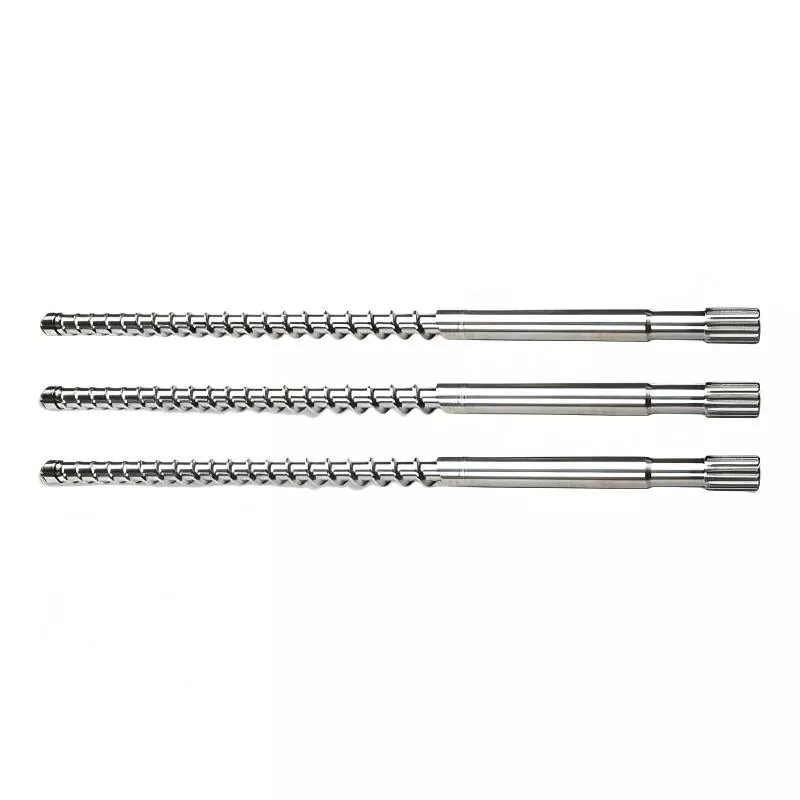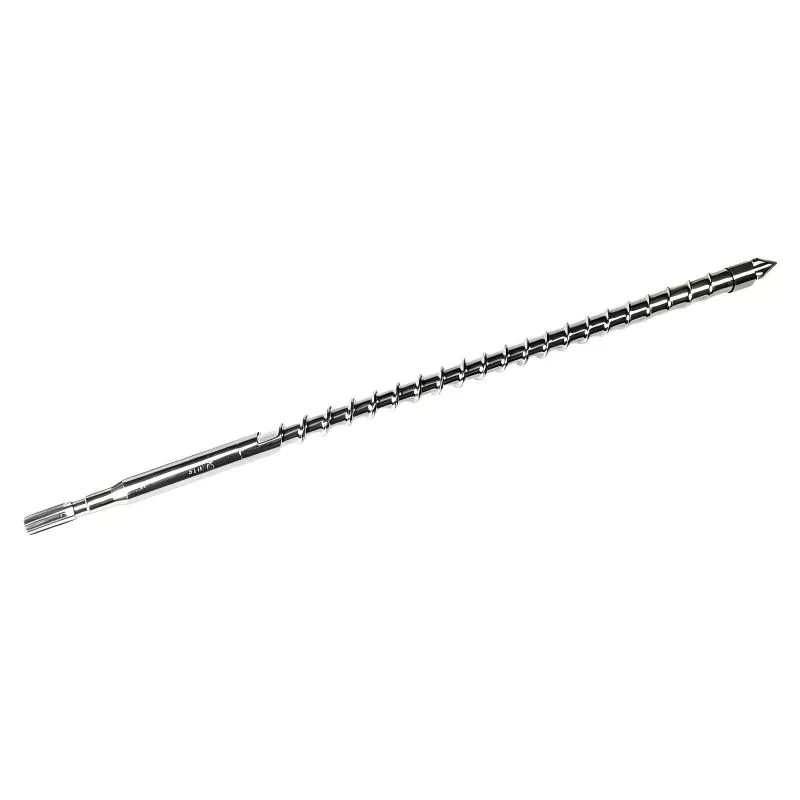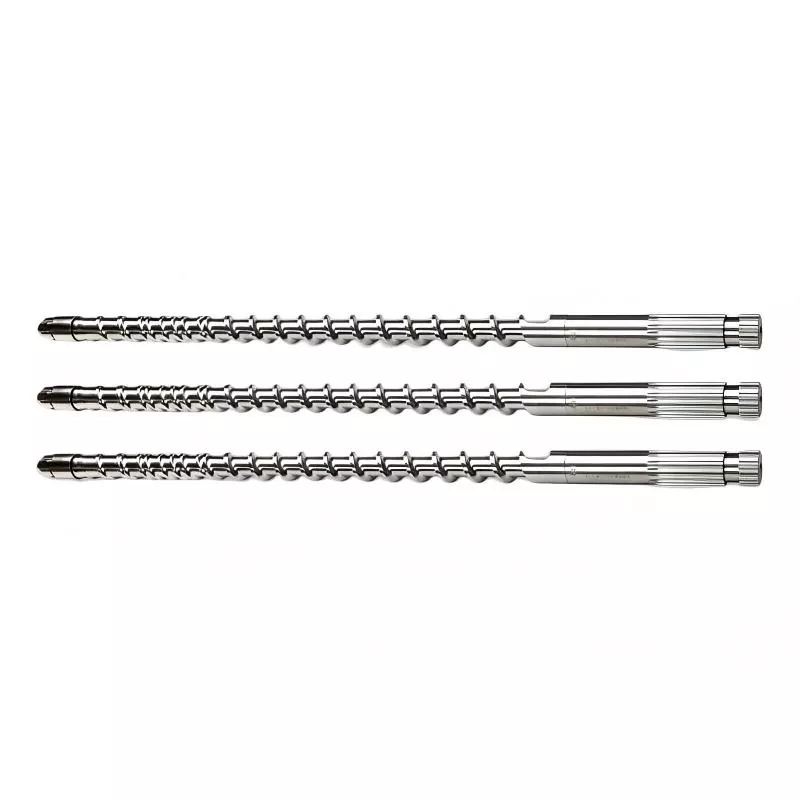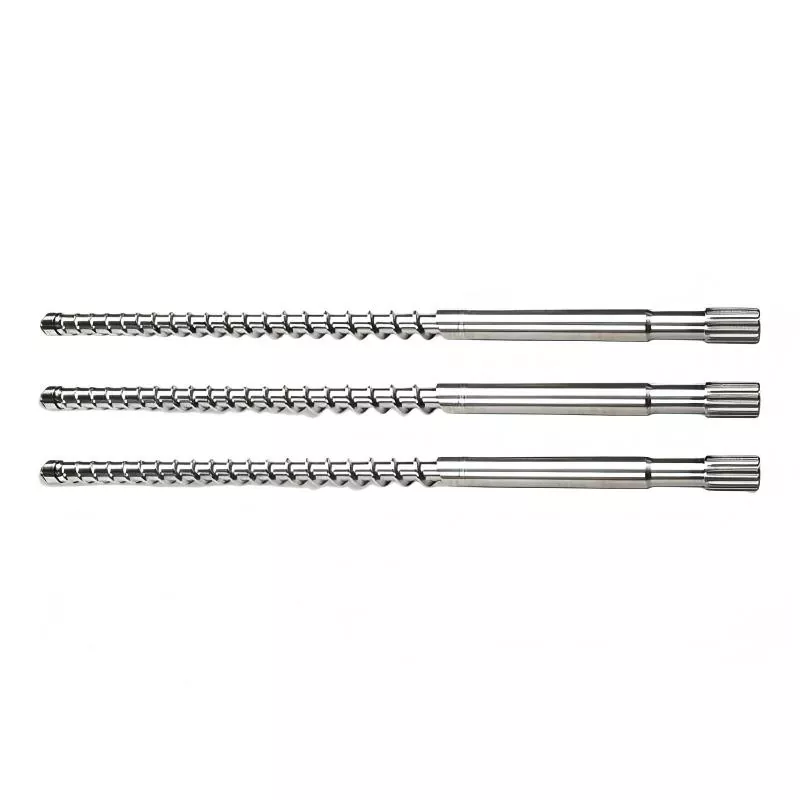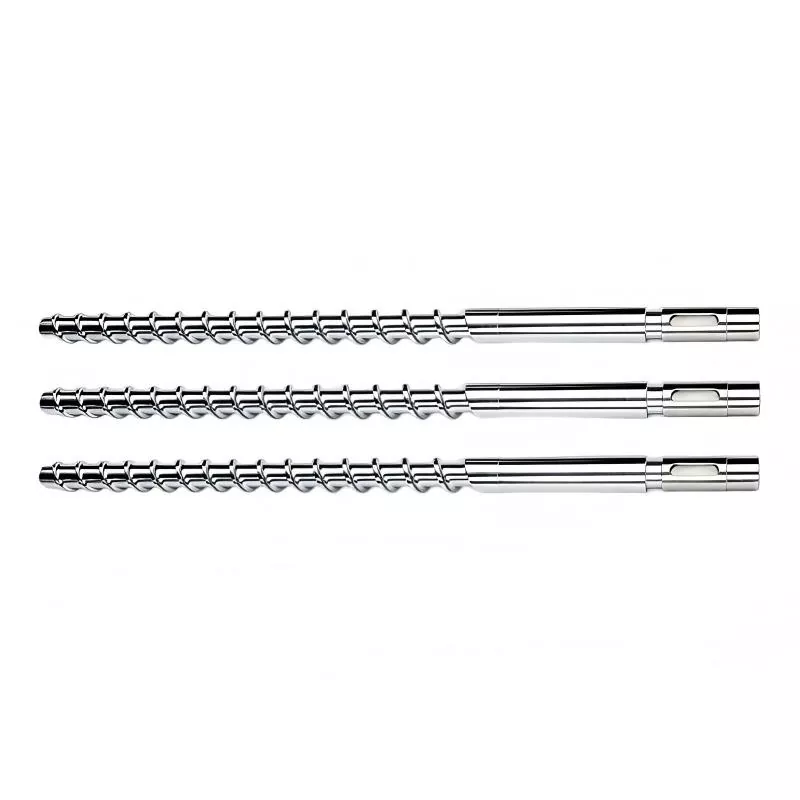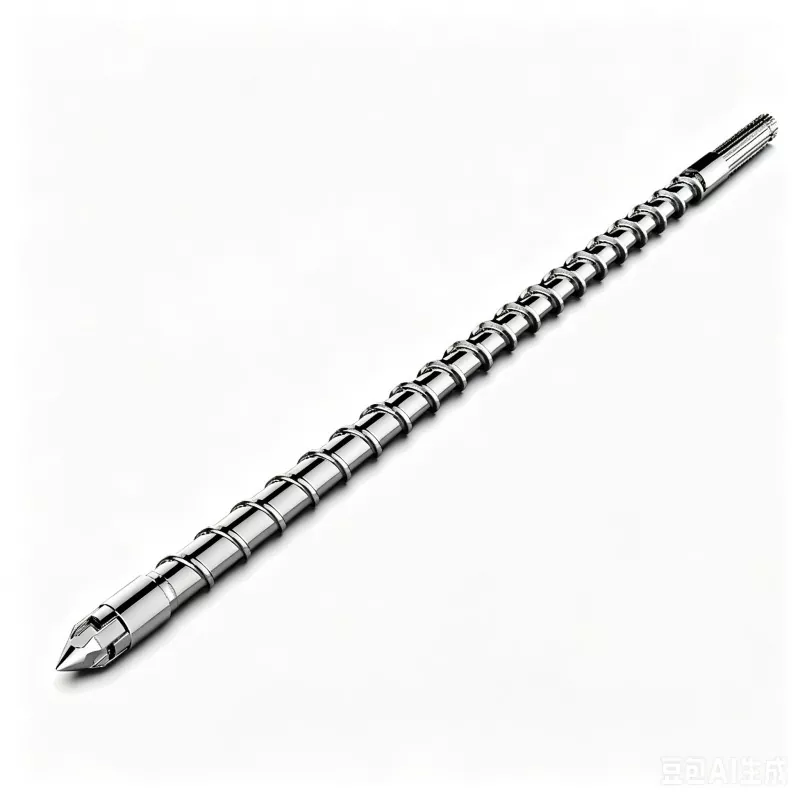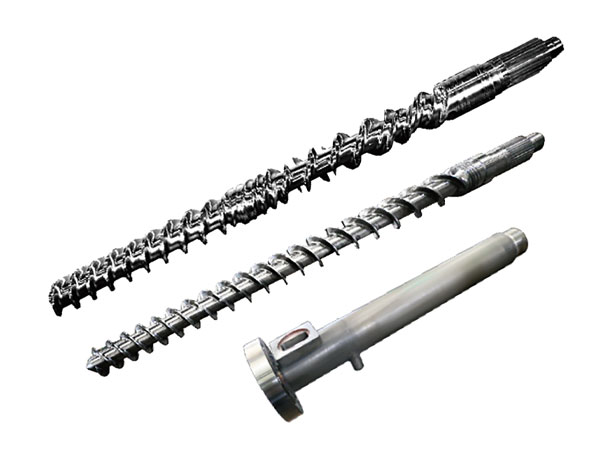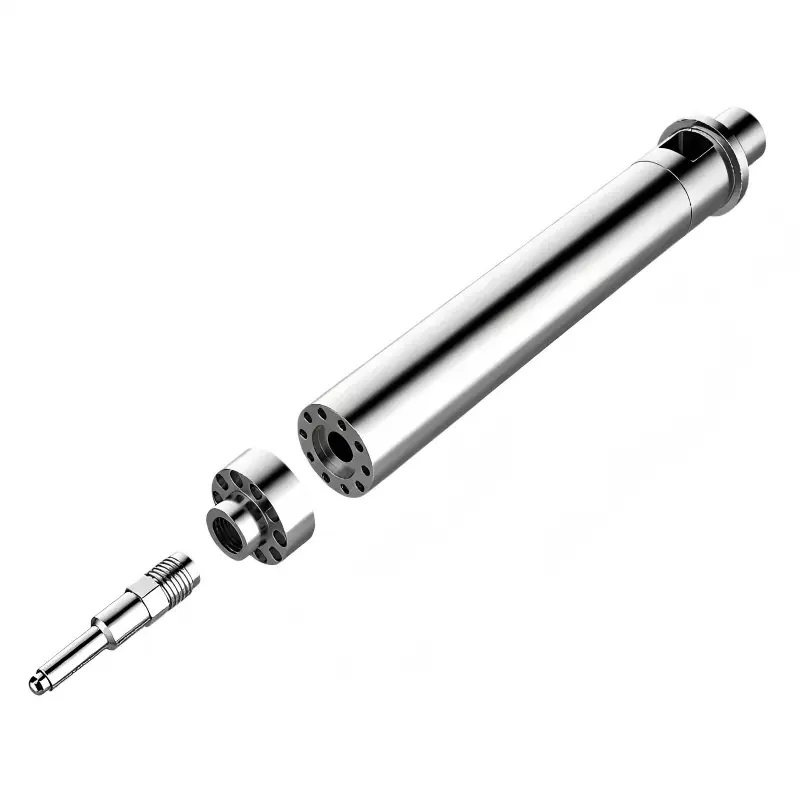
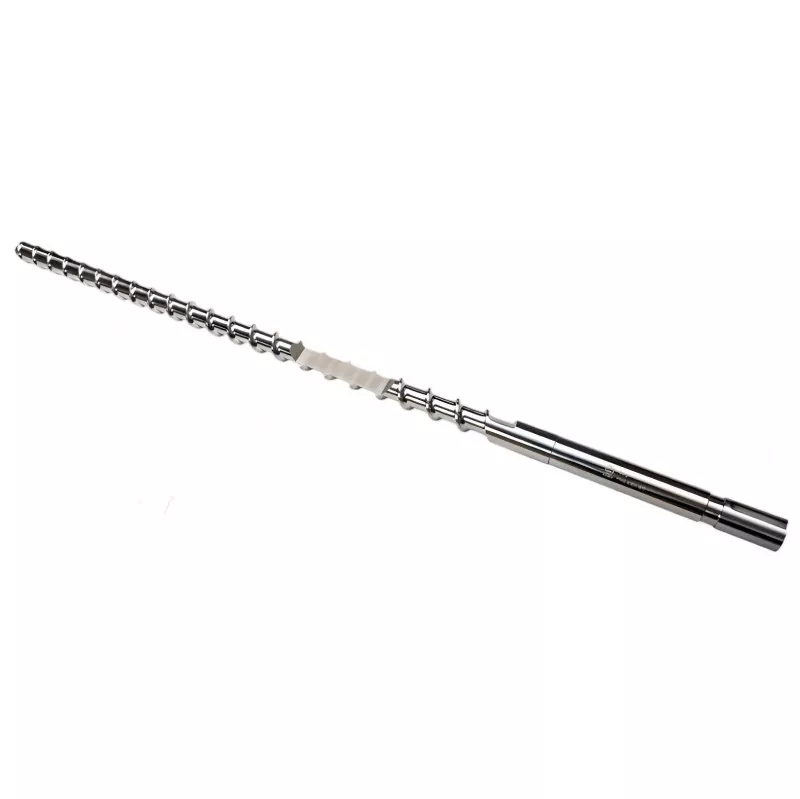
Injection Machines Bimetallic Screw
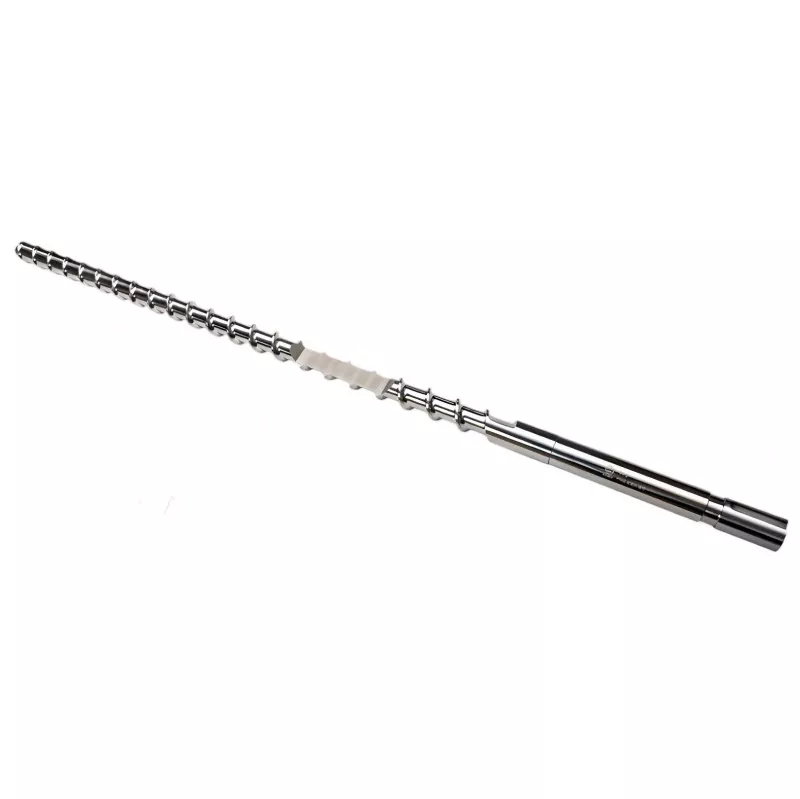
Plastic manufacturers worldwide choose to purchase Injection Machines Bimetallic Screw from HAPPY PLASTICS Factory to fully protect equipment from severe abrasive wear. Our alloy-overlaid screws form an integrated metallurgical bonding layer that avoids alloy peeling and sustains stable melt pressure, reducing screw replacement frequency by 65%.
Cooperating with HAPPY PLASTICS, a professional Chinese manufacturer of Injection Machines Bimetallic Screw, enables production lines to process high-filler harsh materials without fast dimensional loss. We adopt advanced centrifugal casting and plasma arc surfacing to cover high-strength steel base with a 2.0mm thick wear-resistant alloy layer, thoroughly eliminating surface pitting caused by glass fiber abrasion and corrosive volatile gas released by resins.
Technical Specifications & Alloy Composition
To maintain stable dimensional accuracy under long-term heavy-load production, HAPPY PLASTICS’s Injection Machines Bimetallic Screw is equipped with customized alloy layers targeting different abrasion and corrosion sources:
• Base Substrate: High-tensile strength 38CrMoAlA structural alloy steel, treated by vacuum heat treatment to guarantee core toughness and resistance to high-torque torsion deformation.
• Class A Iron-Based Alloy Coating: Hardness HRC 58–62, high chromium and boron content. Specially developed for 15%–30% glass fiber reinforced resins such as PA66 and PBT to resist abrasive scouring.
• Class AAA Nickel-Based Alloy Coating: Hardness HRC 60–65, filled with tungsten carbide particles. Suitable for large-volume recycled material molding and corrosive resins including halogen-free flame retardant plastics.
• Machining Precision: Processed by multi-axis CNC grinding, full-length shaft total straightness controlled below 0.02mm.
Matching Bimetallic Alloy Grade According to Raw Material
Ordinary general replacement bimetallic screws easily suffer alloy layer peeling. Customized Injection Machines Bimetallic Screw matched to your main resin composition ensures long-term stable production:
Against Glass Fiber Abrasion (PA+GF, PP+GF)
For standard screws, hard glass fibers continuously scrape screw flight surfaces, widening the matching clearance between screw and barrel and triggering melt backflow. Our tungsten carbide reinforced bimetallic layer acts as a solid wear barrier, maintaining standard clearance and avoiding melt slippage over millions of molding cycles.
Resist Acid Corrosion from PVC & Flame Retardants
Processing PVC or flame retardant additives will produce corrosive hydrogen chloride and hydrogen bromide gas, which causes pitting corrosion on ordinary steel substrates. Our nickel-cobalt alloy coating forms a dense passivation protective film to block chemical oxidation, eliminating surface pits where residual resin stagnates and carbonizes into black specks.
Preventive Maintenance Guide to Extend Alloy Service Life
Follow standardized operation rules to maximize the service life of your customized Injection Machines Bimetallic Screw:
• Full Heat Soaking: Do not start the screw rotation immediately after the barrel reaches set temperature. Keep constant temperature for extra 20 minutes to fully melt solid residual plastic and prevent hard pellets from striking the bimetallic layer and forming tiny cracks.
• Flushing Before Shutdown: When stopping production of corrosive engineering plastics, flush the barrel with unfilled stable HDPE before cooling to remove residual corrosive volatile substances.
• Rotational Speed Restriction: Lower the linear surface speed of the screw when processing high-filler materials. Reduced RPM cuts local friction heat, improving heat dissipation of the bimetallic layer and preventing thermal degradation of plastic raw materials.
Wear Judgment & Replacement Standard
Molding workshops can judge whether the Injection Machines Bimetallic Screw needs rework or replacement according to the following production abnormal data:
|
Inspection Item |
Normal Allowable Range |
Replacement Critical Value |
Corresponding Solution & Effect |
|
Flight radial wear clearance |
0.04mm–0.07mm |
≥0.18mm |
Replace screw to solve prolonged plasticizing time |
|
Dosing time fluctuation |
Within ±5% of standard cycle |
Rise by ≥25% |
Recheck screw profile to eliminate melt backflow |
|
Product surface defects |
No black speck contamination |
Continuous black specks appear |
Remove screw and inspect flight surface pitting damage |
Technical FAQ
Q: Our previous bimetallic screw alloy layer chipped severely after short-term production of flame-retardant PC. What is the cause?
A: Alloy peeling and chipping are usually caused by mismatched thermal expansion coefficient between the alloy coating and base steel, or excessively brittle surfacing layer unable to withstand thermal shock. HAPPY PLASTICS adopts advanced plasma surfacing technology to form a gradient metallurgical transition zone between substrate and alloy. The integrated structure expands uniformly during rapid temperature changes without cracking or chipping.
Q: Can you customize oversized bimetallic screws to fit worn, scoured barrels?
A: Yes. If your injection barrel is only worn internally without cracking, we can measure its actual inner diameter and customize the outer diameter of the Injection Machines Bimetallic Screw to restore standard radial matching clearance and normal compression effect, saving the high cost of replacing the whole barrel assembly.
Q: What cleaning method can avoid scratching the bimetallic alloy surface when disassembling the screw?
A: Hard steel files, chisels and oxygen acetylene flame burning are forbidden to remove solidified plastic residues. Local high temperature will destroy the heat treatment structure of the alloy layer. Clean the screw while hot with copper wire mesh, brass scrapers or special organic cleaning compounds to dissolve residual plastic safely without scratching the alloy surface.
Hot Tags: injection machines bimetallic screw, bimetallic injection screw, injection molding screw manufacturer
Send Inquiry
Contact Info
-
Address
No. 217, Qiaoxing East Road, Dafeng, Jintang Town, Dinghai District, Zhoushan City, Zhejiang Province, China
-
Tel
-
For inquiries about injection molding machine barrel, injection molding machine screw, extruder gearbox or price list, please leave your email to us and we will be in touch within 24 hours.