
How Does an Inject Mold Screw Barrel Improve Injection Molding Performance?
An injection molding machine depends heavily on the screw and barrel system to transform solid polymer pellets into a consistent, homogeneous melt. When the screw geometry, barrel material, surface treatment, processing conditions, and maintenance practices are properly matched to the application, the system can support stable plasticization, predictable injection performance, better melt quality, and reduced production interruptions. An Inject Mold Screw Barrel is therefore more than a replacement component: it is a critical processing element that directly influences molding consistency, component life, and operating efficiency.
This guide explains the working principles of an injection molding screw barrel, the role of different screw sections, common wear problems, important selection factors, maintenance practices, and practical ways to diagnose processing issues.
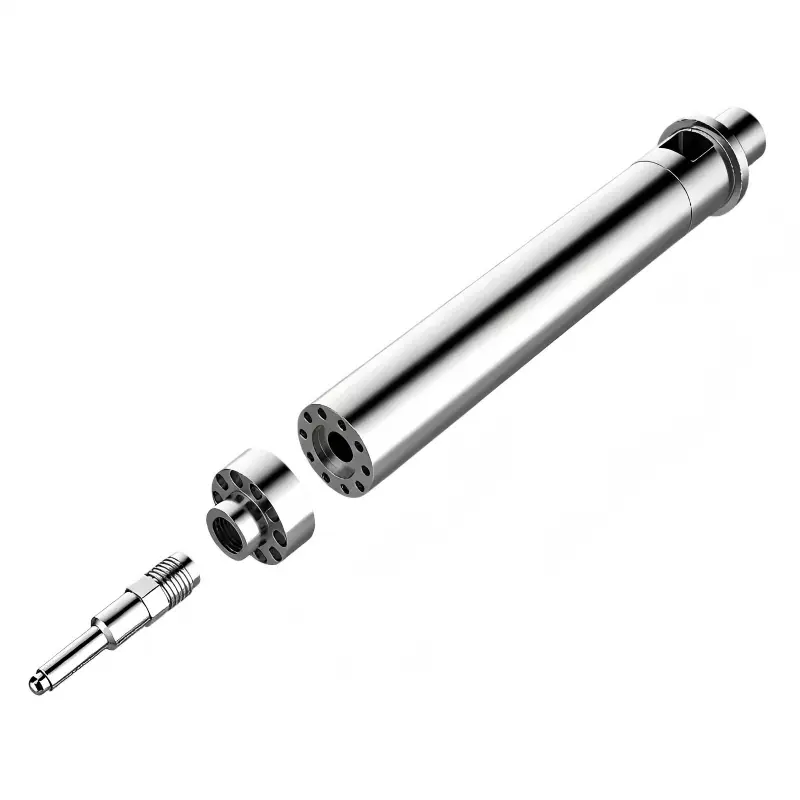
Table of Contents
- What Is an Inject Mold Screw Barrel?
- How Does the Screw Barrel Work?
- What Are the Main Screw Zones?
- Why Is Screw Barrel Quality Important?
- Which Materials and Surface Treatments Matter?
- What Should Be Considered Before Ordering?
- What Causes Screw Barrel Wear?
- How Can Common Processing Problems Be Diagnosed?
- How Can Service Life Be Extended?
- Standard and Wear-Resistant Screw Barrels
- Frequently Asked Questions
- Final Considerations
What Is an Inject Mold Screw Barrel?
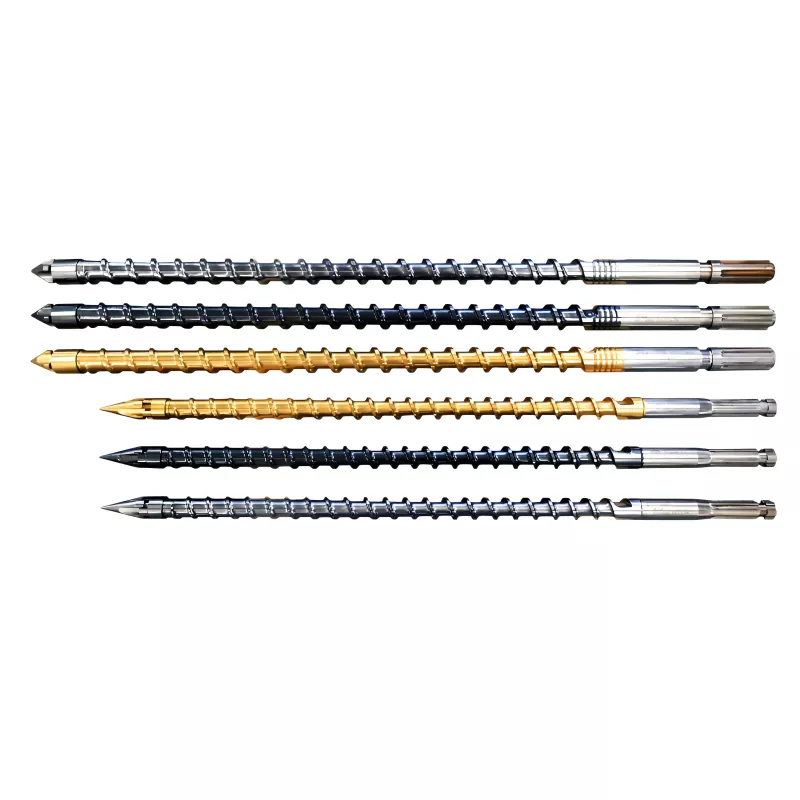
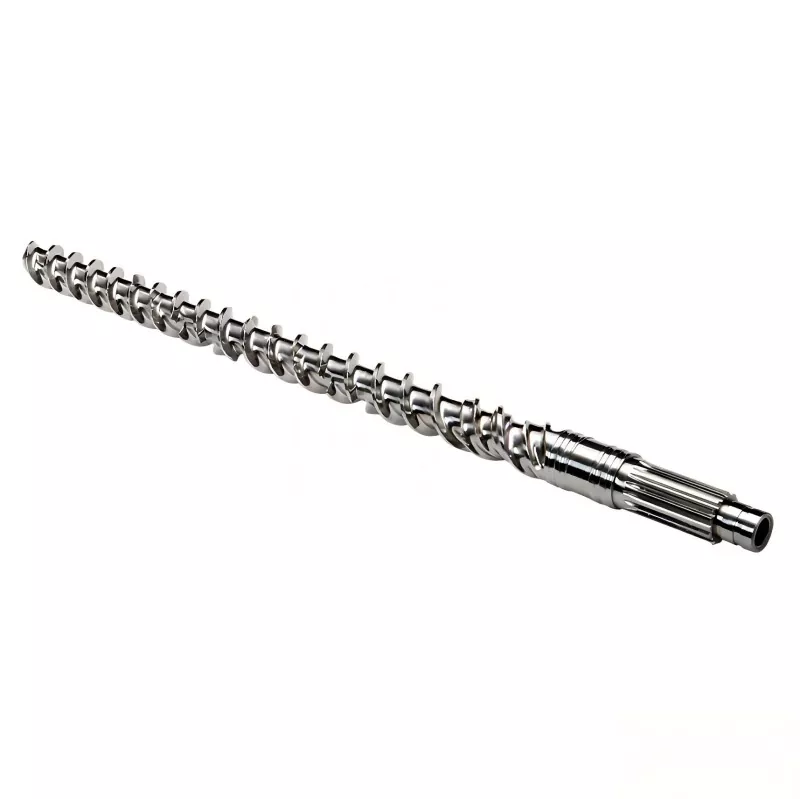
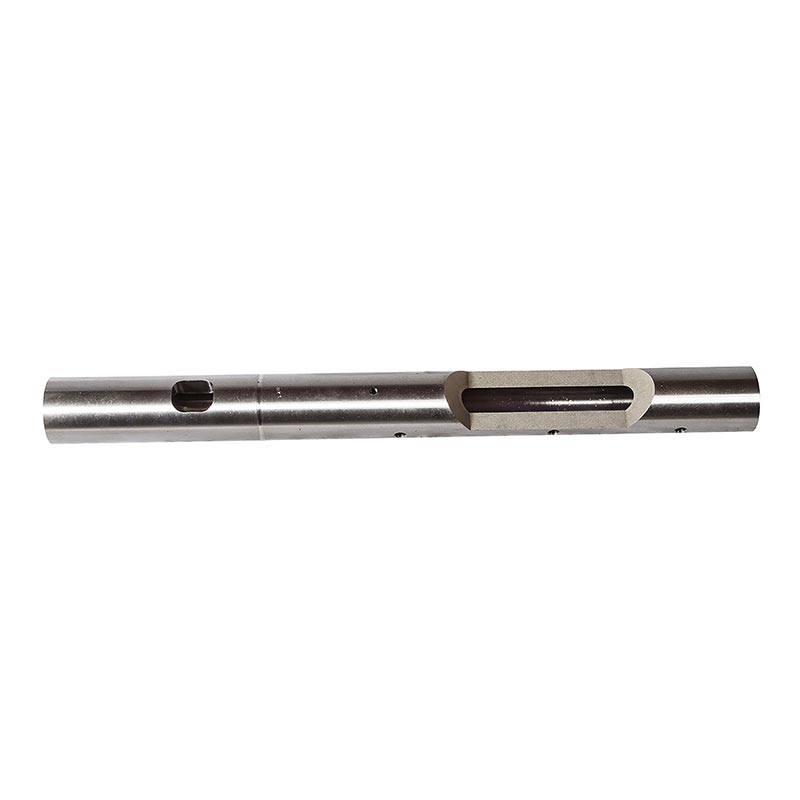
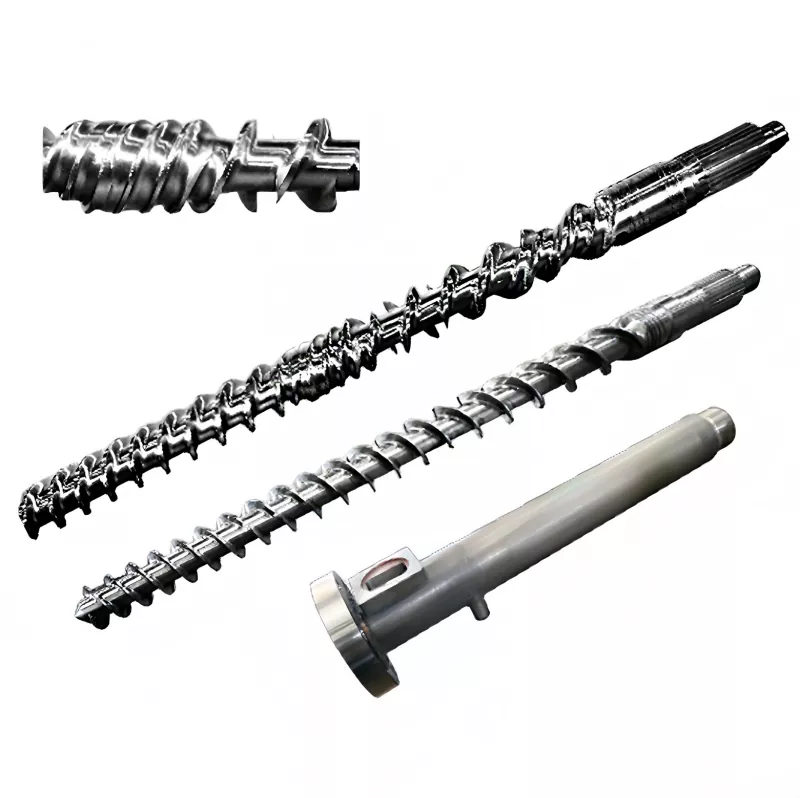
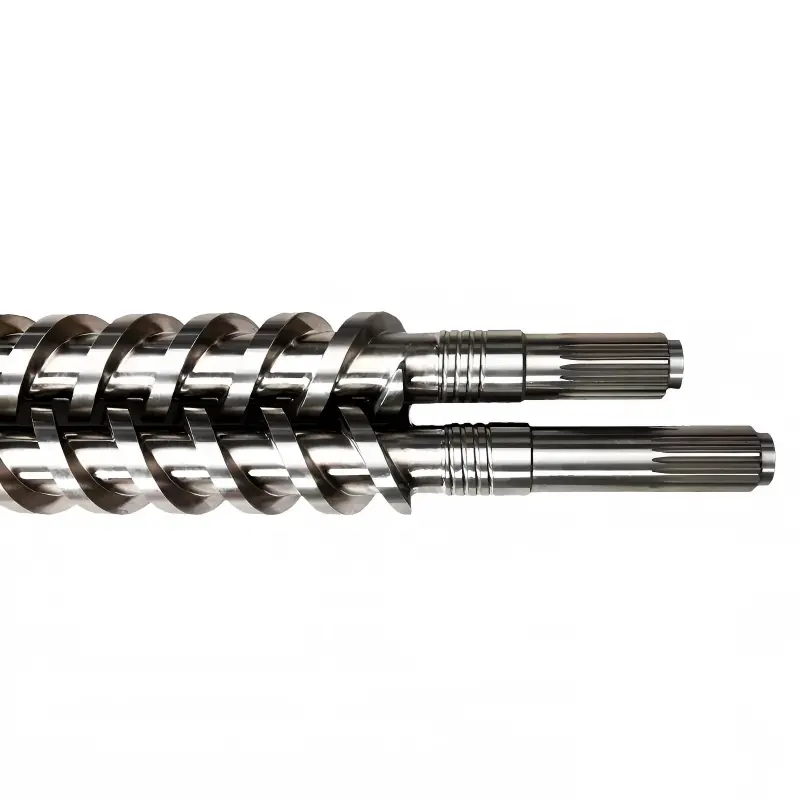
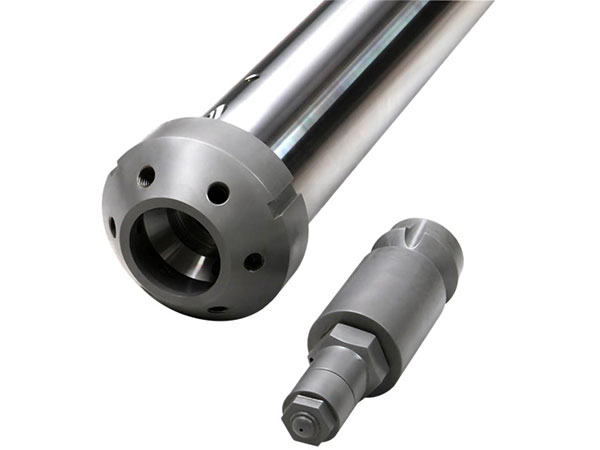
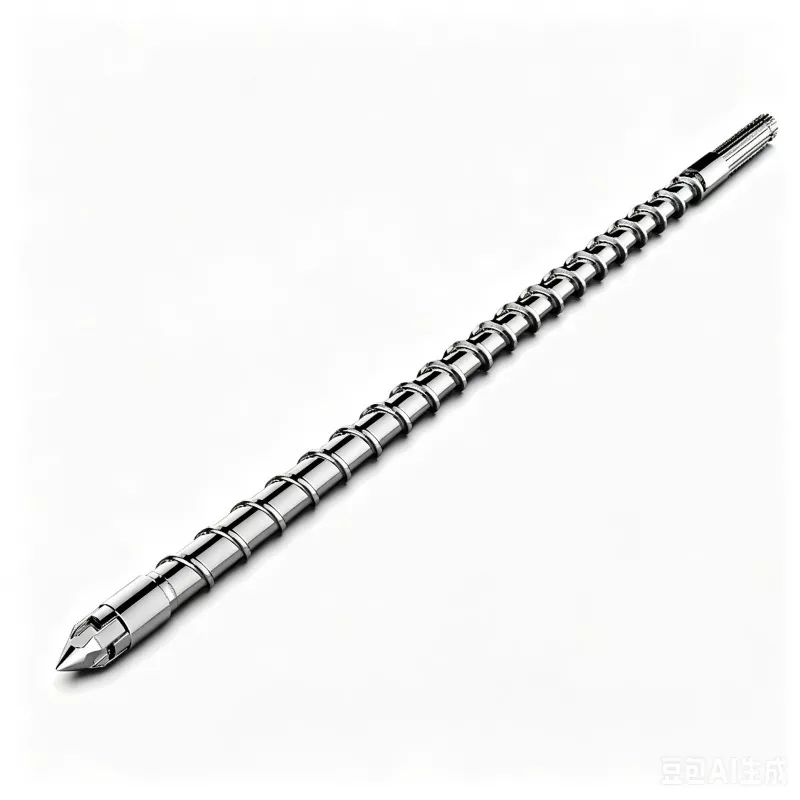
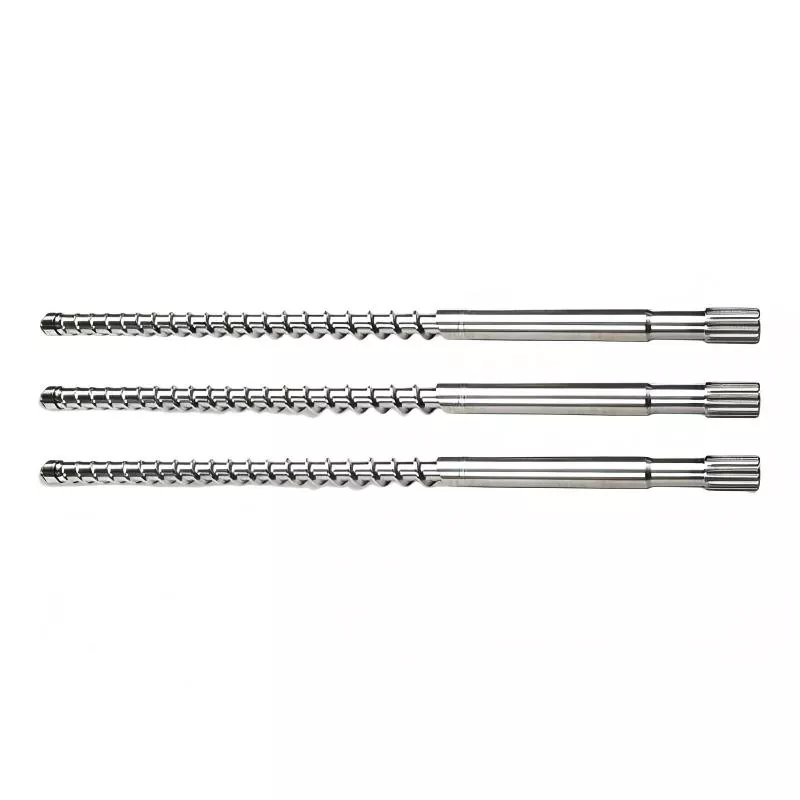
An Inject Mold Screw Barrel is the primary plasticizing assembly inside an injection molding machine. It consists mainly of a rotating screw installed inside a heated barrel. Together, these components convey polymer pellets forward, apply mechanical shear, transfer heat, melt the material, mix it, and prepare a controlled shot for injection into a mold.
The screw barrel must perform several functions at the same time. It needs to process material consistently while operating under elevated temperatures, pressure, friction, and repeated mechanical loads. Its internal dimensions and screw geometry therefore need to be compatible with the machine and the material being processed.
A suitable system helps maintain stable melt preparation. An unsuitable or heavily worn system can contribute to inconsistent shot size, longer recovery time, poor mixing, excessive leakage over the screw flight, unstable melt temperature, and higher scrap rates.
How Does the Screw Barrel Work?
During a typical molding cycle, plastic pellets enter the feed section of the barrel. Rotation of the screw moves the material toward the front while heaters surrounding the barrel provide thermal energy. Friction and viscous dissipation generated during screw rotation also contribute to melting.
As the polymer travels forward, the screw compresses and homogenizes it. A melt pool gradually develops, while unmelted particles are progressively incorporated into the melt. The screw then meters the required amount of material in front of its tip. During injection, the screw moves forward like a plunger and forces the prepared melt through the nozzle and into the mold.
Key point: Screw rotation is not simply a conveying action. Screw geometry, compression, residence time, barrel temperature, back pressure, and rotational speed interact to determine how effectively the polymer is plasticized.
Because every polymer behaves differently under heat and shear, screw design should be considered together with the resin formulation and molding process. Materials containing abrasive fillers may require substantially different wear protection from standard unfilled thermoplastics.
What Are the Main Screw Zones?
Most conventional injection molding screws can be understood through three functional zones. Their exact dimensions vary according to screw design and application, but each zone contributes to the overall plasticizing process.
| Screw Zone | Primary Function | Typical Concern |
|---|---|---|
| Feed Zone | Receives and conveys solid pellets. | Poor feeding or bridging. |
| Compression / Transition Zone | Compresses pellets and promotes melting. | Excessive shear or incomplete melting. |
| Metering Zone | Homogenizes and meters the melt. | Poor mixing or unstable metering. |
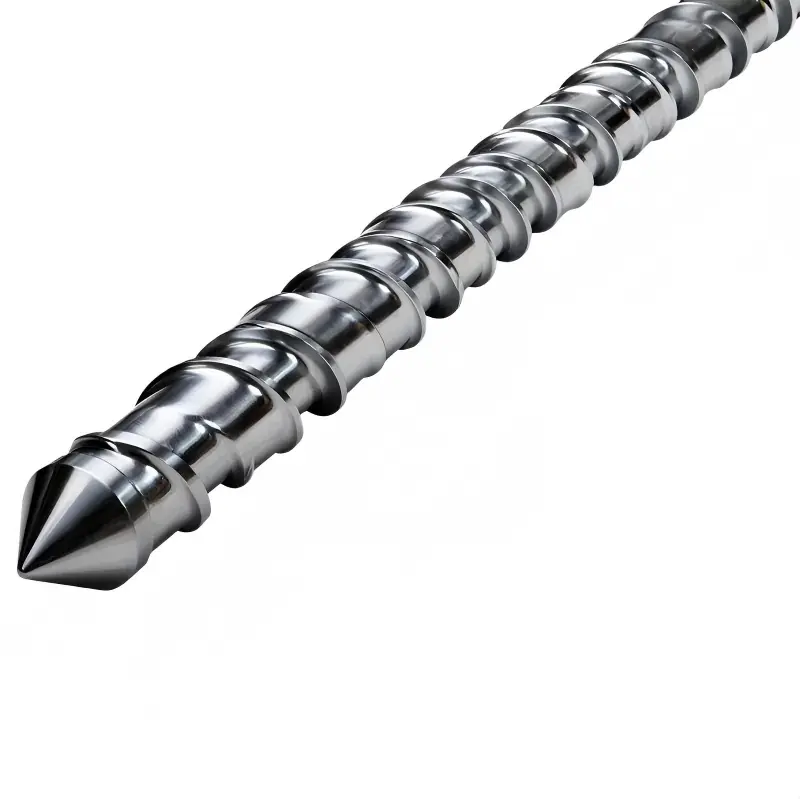
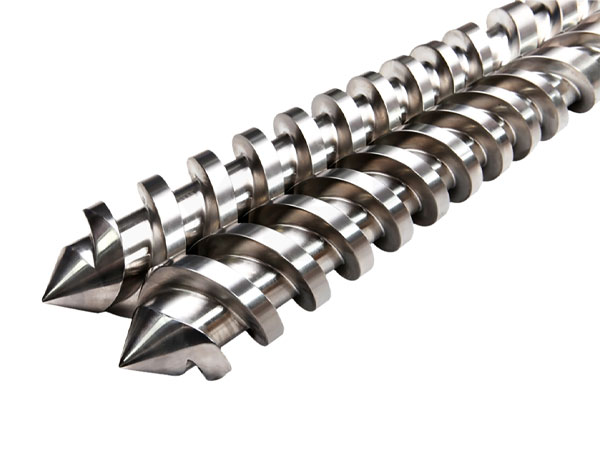
The screw tip and check ring assembly are also important because they help control melt movement during recovery and injection. Excessive clearance, damaged components, or unsuitable design can affect pressure holding and shot consistency.
Why Is Screw Barrel Quality Important?
The screw barrel has a direct relationship with the repeatability of plasticizing. Even when the injection machine, mold, and resin are unchanged, a severely worn screw barrel can alter the way material is processed.
- More consistent plasticization: Correct screw geometry helps produce a more predictable melt.
- Improved shot stability: Controlled metering and reduced internal leakage support repeatable shot preparation.
- Better material handling: Proper surface properties can reduce premature wear when processing demanding compounds.
- Reduced unplanned downtime: A properly specified component can help avoid frequent replacement caused by accelerated wear.
- Process control: Consistent screw and barrel dimensions make it easier to establish repeatable processing conditions.
For high-volume production, these factors can become significant because small variations are repeated over thousands or millions of molding cycles. A screw barrel should therefore be evaluated as part of the complete production system rather than as an isolated mechanical spare part.
Which Materials and Surface Treatments Matter?
Screw barrel construction must account for the resin and additives being processed. Common engineering considerations include base steel selection, hardness, corrosion resistance, abrasion resistance, nitriding, hard-facing, and other surface or bimetallic solutions.
Standard thermoplastics may impose relatively moderate wear conditions, while glass-fiber-reinforced, mineral-filled, flame-retardant, or other highly filled compounds can be considerably more demanding. Some polymers and additives can also create corrosion-related challenges at elevated temperatures.
Material Considerations at a Glance
- Unfilled materials: focus on dimensional accuracy and general durability.
- Abrasive-filled materials: prioritize wear-resistant construction.
- Corrosive formulations: consider corrosion-resistant materials or protective treatments.
- High-temperature polymers: verify material compatibility with the intended processing range.
The right choice depends on actual production conditions. Resin grade, filler percentage, processing temperature, throughput, screw speed, pressure, and expected operating hours should all be considered before specifying materials or treatments.
What Should Be Considered Before Ordering?
One of the most common purchasing problems is ordering a screw barrel using only the machine model or screw diameter. While those details are useful, they may not provide enough information for accurate manufacturing.
- Machine make and model: Confirm the exact machine configuration.
- Screw diameter: Match the dimensional requirements precisely.
- Screw length and L/D ratio: These influence residence time and plasticizing behavior.
- Material being processed: Identify the resin and any abrasive or corrosive additives.
- Output requirements: Consider shot weight, cycle time, and expected production volume.
- Screw geometry: Review compression ratio, flight design, mixing requirements, and other application-specific features.
- Barrel configuration: Verify feed opening, heating zones, nozzle interface, and machine-side dimensions.
- Wear protection: Select an appropriate material or treatment based on the processing environment.
For a replacement component, supplying drawings, measurements, photographs, existing screw specifications, and resin information can significantly reduce the risk of dimensional or application mismatch.
What Causes Screw Barrel Wear?
Wear is a normal concern in injection molding, but its rate varies substantially between applications. Abrasive fillers, contaminated material, excessive temperatures, poor cleaning practices, misalignment, and unsuitable processing conditions can all contribute to accelerated degradation.
| Symptom | Possible Cause | Useful Check |
|---|---|---|
| Increasing recovery time | Reduced plasticizing efficiency or wear | Review screw speed, temperatures, and clearances. |
| Shot variation | Possible leakage or check-ring issues | Inspect screw tip and non-return valve. |
| Poor color consistency | Insufficient mixing or material degradation | Check screw design and thermal profile. |
| Metallic particles or contamination | Mechanical wear or surface damage | Stop and inspect the plasticizing unit. |
Measurements are more reliable than visual inspection alone. During planned maintenance, checking screw flight dimensions, barrel internal diameter, clearances, and related components can help determine whether refurbishment or replacement is appropriate.
How Can Common Processing Problems Be Diagnosed?
When molding performance changes, replacing the screw barrel immediately is not always the correct first step. A systematic investigation can help identify whether the problem originates from the plasticizing assembly, process settings, material condition, or another machine component.
Start by recording measurable changes such as recovery time, cushion, injection pressure, melt temperature, shot variation, screw position, and cycle time. Compare these observations with historical production data when available.
Next, inspect the resin drying and feeding process. Moisture, contamination, incorrect material, or inconsistent pellet supply can create symptoms that appear to be mechanical problems.
If process conditions are stable, inspect the screw, barrel, screw tip, check ring, nozzle, and related components. Excessive clearance between the screw and barrel can reduce plasticizing and metering efficiency. A damaged non-return valve can also cause inconsistent shot behavior.
Practical troubleshooting sequence:
Process data → material condition → temperature profile → screw operation → screw/barrel measurements → component inspection → corrective action.
How Can Service Life Be Extended?
Good maintenance does not eliminate wear, but it can help control unnecessary damage and make component replacement more predictable.
- Use the correct resin and avoid contamination with foreign materials.
- Follow appropriate startup and shutdown procedures for the polymer being processed.
- Avoid unnecessary screw speeds and processing temperatures.
- Monitor unusual recovery-time changes and pressure behavior.
- Inspect the screw tip and check ring during scheduled maintenance.
- Measure screw and barrel dimensions rather than relying solely on appearance.
- Use suitable purging procedures when changing materials.
- Keep records of operating hours, materials processed, and maintenance work.
Preventive inspection is particularly valuable for production lines that process abrasive compounds continuously. Detecting gradual dimensional changes early can help production teams plan refurbishment or replacement during scheduled downtime rather than after an unexpected failure.
Standard and Wear-Resistant Screw Barrels
There is no universal screw barrel configuration for every injection molding application. A standard construction may be suitable for general-purpose materials, while a more wear-resistant solution can be justified for demanding compounds.
| Consideration | General-Purpose Application | High-Wear Application |
|---|---|---|
| Material | Often unfilled or moderately demanding | Often glass, mineral, or other abrasive compounds |
| Priority | Balanced performance and cost | Wear resistance and service durability |
| Maintenance | Routine inspection | Closer monitoring of dimensions and wear |
The most economical option should be evaluated over the complete operating period. A lower initial component price may not represent the lowest total operating cost if the part wears rapidly or causes frequent production interruptions.
Frequently Asked Questions
What is the main purpose of an injection molding screw barrel?
Its main purpose is to convey, melt, mix, homogenize, and meter polymer before injection. The screw and barrel work together to prepare a controlled volume of melt for each molding cycle.
How do I know when a screw barrel needs replacement?
Typical warning signs include increasing recovery time, unstable shot size, inconsistent melt quality, excessive leakage, abnormal wear, or measurable dimensional clearance beyond the machine or component specification. Proper measurement is preferable to judging condition by appearance alone.
Can one screw design process every type of plastic?
No. Different polymers have different melting characteristics, thermal sensitivity, viscosity, and mixing requirements. A screw designed for a particular material family may not provide optimal performance with another formulation.
Why do glass-filled materials require special attention?
Glass fibers are abrasive and can accelerate wear on screw flights, barrel surfaces, and other plasticizing components. For continuous processing of abrasive compounds, wear-resistant materials or surface treatments may be appropriate.
Does screw speed affect screw barrel life?
Screw speed affects shear, heat generation, throughput, and the mechanical operating environment. Excessive or inappropriate speed can contribute to unnecessary thermal or mechanical stress, so operating conditions should be established according to the material and machine.
What information should I provide when requesting a replacement screw barrel?
Useful information includes machine manufacturer and model, screw diameter, screw length or L/D ratio, existing screw drawing if available, barrel dimensions, resin type, filler content, processing temperature, shot weight, and production requirements. Photos and dimensional measurements can also help confirm the configuration.
Final Considerations
An Inject Mold Screw Barrel plays a fundamental role in injection molding because it determines how efficiently and consistently polymer is transformed from pellets into a usable melt. Screw geometry, barrel condition, material selection, wear protection, operating parameters, and maintenance all influence the final result.
For buyers and production engineers, the most important lesson is to specify the component according to the actual application rather than selecting it only by diameter or machine name. Understanding the resin, production conditions, wear environment, and required output can lead to a more suitable screw barrel and a more predictable molding process.
Looking for a Reliable Screw Barrel Solution?
ZHOUSHAN HAPPY PLASTICS MACHINERY CO., LTD. focuses on plastic processing machinery components and can support customers with screw and barrel solutions for different injection molding applications. Providing detailed machine and material information is an effective first step toward identifying a suitable configuration.
Need a screw barrel for your injection molding machine? Contact us to discuss your machine specifications, processing material, dimensional requirements, and application needs.
Related News
- What Is a Halogen-Free Screw and Why Does It Matter in Plastic Processing?
- What Makes a Conical Twin Screw and Barrel Reliable for Demanding Plastic Extrusion?
- How Can You Choose the Right Screw for Chen Hsong Injection Machine?
- How Does an Injection Screw Head Improve Plasticizing Performance in Injection Molding?
- How Does Injection Machines Bimetallic Screw Improve Plastic Processing Performance?
- How Does a Barrel for Chen Hsong Injection Machine Improve Injection Molding Performance?
Leave me a message