
What Is an Extruder Gearbox and How Does It Work in Plastic Processing?
In plastic processing, the extruder is the heart of the production line, but it is the extruder gearbox that powers its operation. An Extruder Gearbox is a heavy-duty mechanical transmission system designed to reduce the high rotational speed of the prime mover (electric motor) to a lower, more usable speed while simultaneously multiplying the torque to drive the extruder screw. Without this critical component, the motor's high-speed, low-torque output would be incapable of melting, mixing, and conveying plastic pellets through the barrel. At ZHOUSHAN HAPPY PLASTICS MACHINERY CO., LTD., our factory has been engineering and manufacturing high-performance Extruder Gearbox for over 20 years, serving a wide range of extrusion applications—from pipe and profile extrusion to film and sheet production. This article provides a comprehensive technical explanation of what an Extruder Gearbox is, how it operates, and the engineering principles that make it indispensable in modern plastic processing.
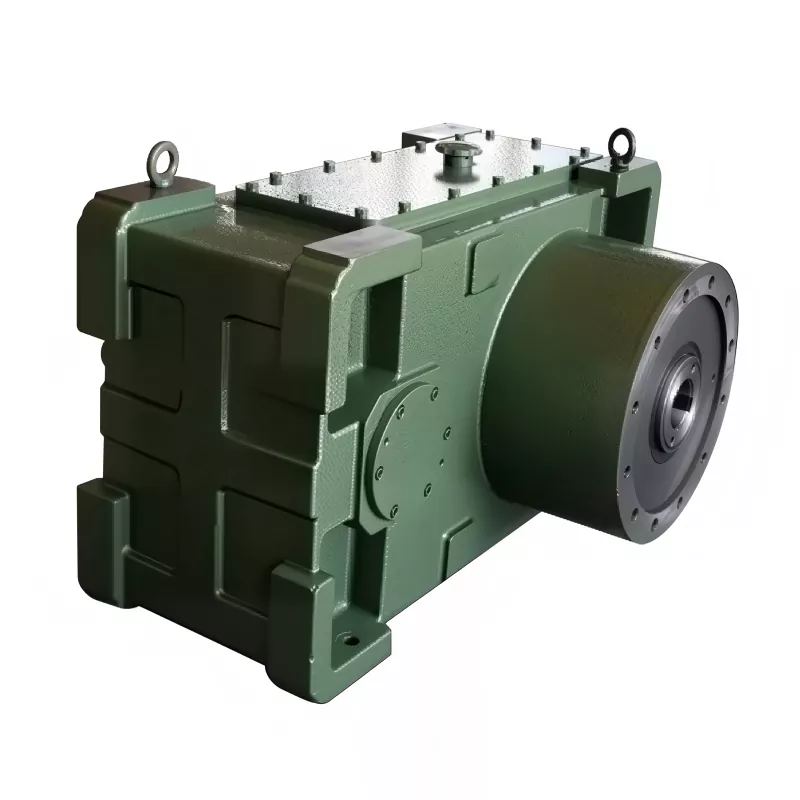
An Extruder Gearbox is not just a simple gear reducer; it is a sophisticated system that must withstand high radial and axial loads, operate continuously under heavy loads, and maintain precision over years of service. The gearbox typically consists of a set of helical or herringbone gears enclosed in a robust cast iron housing, with bearings designed to handle the thrust load from the screw. The input shaft connects to the motor, and the output shaft drives the extruder screw. Key performance parameters include reduction ratio, torque capacity, efficiency, and thermal stability. In this comprehensive guide, we will explore the working principles, key components, and design considerations of Extruder Gearbox, provide detailed technical specifications, and share maintenance best practices. Whether you are a process engineer, a maintenance manager, or a plant owner, this article will equip you with the knowledge to select, operate, and maintain an Extruder Gearbox for optimal performance in your plastic processing line.
Table of Contents
- 1. What Are the Main Components of an Extruder Gearbox and Their Functions?
- 2. How Does an Extruder Gearbox Convert Motor Power into Screw Torque?
- 3. What Are the Key Technical Specifications of Our Extruder Gearbox?
- 4. How Can Proper Maintenance Extend the Lifespan of an Extruder Gearbox?
- Frequently Asked Questions (FAQ)
- Conclusion and Gearbox Selection Consultation
What Are the Main Components of an Extruder Gearbox and Their Functions?
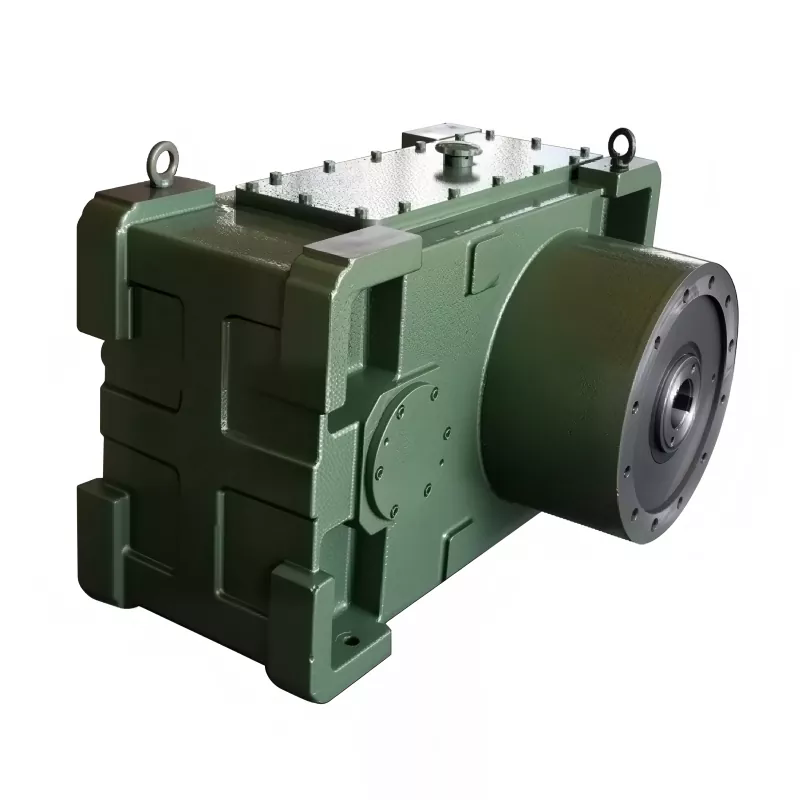
An Extruder Gearbox is a precision-engineered assembly that consists of several critical components working in harmony to transmit power efficiently. Each component plays a specific role in ensuring the gearbox can handle the demanding conditions of plastic extrusion—continuous operation, high torque, and significant thrust loads. At ZHOUSHAN HAPPY PLASTICS MACHINERY CO., LTD., our factory designs Extruder Gearbox with a modular approach, using high-grade materials and advanced manufacturing techniques to ensure reliability and long service life. Understanding the function of each component is essential for proper selection, maintenance, and troubleshooting.
Main components of our Extruder Gearbox:
- Housing: The housing is the structural body of the gearbox, typically made from high-strength cast iron (GGG-40 or equivalent). It provides rigidity, supports the bearings, and contains the lubricating oil. The housing is designed with internal ribs to enhance stiffness and reduce vibration. Our housings are machined with high precision to ensure accurate alignment of the gears and shafts.
- Gears: The gears are the primary power transmission elements. In most modern Extruder Gearbox, helical or herringbone gears are used for their smooth engagement and high load-carrying capacity. The gears are manufactured from case-hardened alloy steel (e.g., 20CrMnTi) with a hardened tooth surface (58-62 HRC) and a tough core, providing excellent wear resistance and fatigue strength. The gear teeth are ground to a finish of RA 0.4 µm to ensure quiet operation and high efficiency.
- Input and Output Shafts: The input shaft connects to the motor coupling, and the output shaft connects to the extruder screw. Both shafts are made from high-strength alloy steel, with the output shaft featuring a larger diameter to accommodate the high torque and thrust loads. The output shaft is equipped with a thrust bearing arrangement to handle the axial force generated by the plastic melt pressure.
- Bearings: The gearbox uses a combination of radial and thrust bearings. Radial bearings (cylindrical roller bearings) support the shaft and gears, while thrust bearings (angular contact ball bearings or tapered roller bearings) handle the axial load from the screw. Our Extruder Gearbox uses premium bearings from SKF or FAG, selected for their high load ratings and long life.
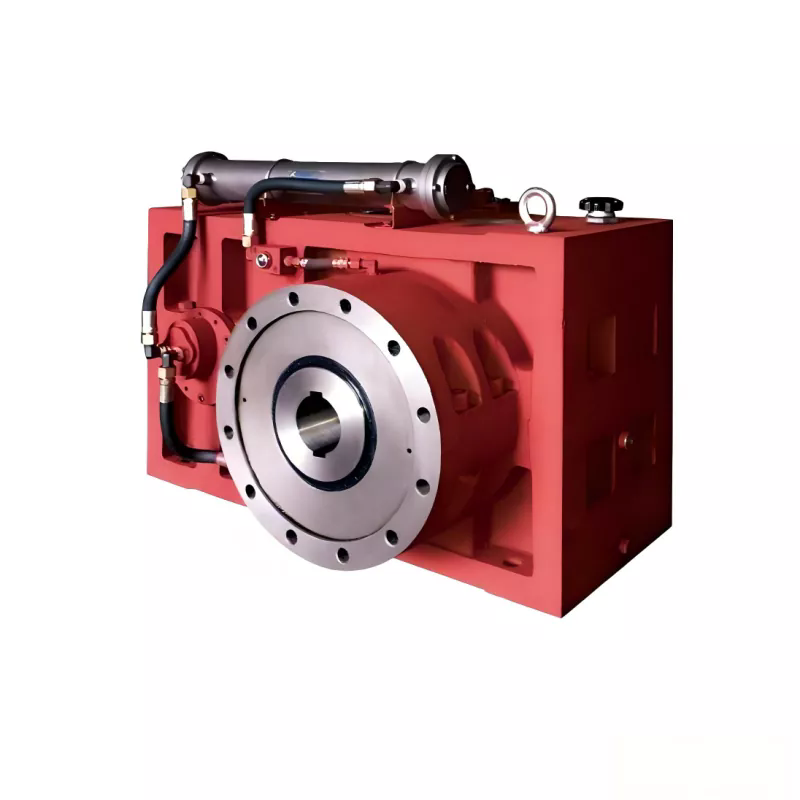
- Lubrication System: The gearbox is equipped with a forced oil lubrication system that supplies oil to all bearings and gear meshing points. The lubrication system includes a pump, filter, cooler, and pressure relief valve. The oil flow ensures that friction heat is dissipated, maintaining the gearbox at a stable operating temperature.
- Seals: High-quality shaft seals (both static and dynamic) prevent oil leakage and keep contaminants out. Our Extruder Gearbox uses dual-lipped seals with a dust wiper for the output shaft, protecting the internal components from dust and moisture.
The synergy of these components is what makes a reliable Extruder Gearbox. For example, the housing provides the foundation; the gears transmit and reduce speed; the bearings handle the forces; and the lubrication system ensures durability. A failure in any one component can lead to catastrophic breakdown. Our factory conducts a full assembly and run-in test on every Extruder Gearbox, checking for temperature rise, vibration, and noise levels. This quality assurance process has resulted in a field reliability rate of over 99.5 percent for our gearboxes over the past decade.
Furthermore, our Extruder Gearbox designs incorporate a "power-split" technology where the torque is distributed across multiple gear pairs, reducing the load on individual teeth and increasing the overall power density. This allows our gearboxes to transmit higher torque in a more compact footprint, which is a significant advantage for space-constrained extrusion lines. By understanding these components, operators can better appreciate the maintenance requirements and the importance of using genuine spare parts.
How Does an Extruder Gearbox Convert Motor Power into Screw Torque?
The conversion of motor power into usable screw torque is the fundamental function of an Extruder Gearbox. The process begins with the motor, which typically operates at a high speed (e.g., 1,500 rpm for a 4-pole motor) and produces a relatively low torque. The Extruder Gearbox reduces this speed to a typical screw speed range of 20 to 150 rpm, multiplying the torque by the same ratio (minus minor friction losses). This reduction is achieved through a set of gears with different numbers of teeth. The gear ratio is determined by the number of teeth on the output gear divided by the number of teeth on the input gear. For example, a gearbox with a 15:1 ratio will reduce the input speed by a factor of 15 and increase the torque by a factor of 15 (approximately).
Detailed explanation of the power conversion process:
- Speed reduction via gearing: The motor shaft drives the input pinion gear, which meshes with a larger gear (the intermediate gear). The intermediate gear, in turn, drives another gear, and so on, until the output gear is reached. Each meshing pair reduces the speed and increases the torque proportionally to the ratio of their teeth. The total reduction is the product of the ratios of all the gear pairs.
- Torque multiplication: As the speed decreases, the torque increases by the same factor, minus a small percentage (typically 1-2 percent) for frictional losses. The torque output of the gearbox is the primary driver for the extruder screw, providing the force needed to overcome the resistance of the plastic melt.
- Thrust load management: While the gears are multiplying torque, the screw generates a significant axial thrust load (force pushing backward against the screw). This thrust load is transmitted through the screw shaft to the output shaft of the gearbox. Our Extruder Gearbox is equipped with heavy-duty thrust bearings that are rated to handle up to 2.5 times the maximum screw thrust, ensuring that the gearbox is not damaged by this axial force.
- Efficiency optimization: Our Extruder Gearbox is designed for efficiency, with helical gears ground to a high finish, and a lubrication system that minimizes oil churning losses. The overall efficiency of our gearboxes ranges from 94 to 97 percent, depending on the reduction ratio and the operating conditions. This means that most of the motor power is converted into useful mechanical work at the screw, reducing energy consumption and operating costs.
To put this in perspective, consider a 150 kW motor operating at 1,500 rpm. The motor delivers a torque of approximately 955 Nm. With a 15:1 gearbox, the output speed drops to 100 rpm, and the output torque rises to roughly 14,300 Nm (minus losses). This high torque is essential for processing rigid plastics like PVC and HDPE, where the screw must overcome high resistance. Without the gearbox, the motor would stall or require an impractically large motor to produce the same torque at low speeds.
Our factory at ZHOUSHAN HAPPY PLASTICS MACHINERY CO., LTD. has developed a proprietary gear tooth profile that optimizes the contact pattern under load, reducing stress concentration and extending gear life. We also design our Extruder Gearbox with a "torque density" that allows for higher power in a smaller package, which is increasingly important for high-output extrusion lines. By understanding the torque and speed conversion process, operators can better appreciate the importance of selecting the correct gearbox ratio for their specific application. A mismatch in ratio can lead to either insufficient torque (causing screw stalling) or excessive speed (leading to poor melt quality and potential damage to the screw).
What Are the Key Technical Specifications of Our Extruder Gearbox?
HAPPY offers a comprehensive range of Extruder Gearbox designed for various plastic extrusion applications, including pipe, profile, sheet, film, and compounding lines. Our gearboxes are available in sizes from 30 kW to 2,000 kW, with ratios from 5:1 to 25:1, and with single or twin-screw configurations. The table below summarizes the key technical specifications for our most popular Extruder Gearbox models, which are widely used in the plastics processing industry. Our factory can also produce custom gearboxes to meet specific requirements, including special ratios, mounting arrangements, and cooling systems.
| Model | Power (kW) | Reduction Ratio | Max Output Torque (Nm) | Max Input Speed (rpm) | Max Thrust Load (kN) | Weight (kg) | Lubrication Type | Efficiency (%) |
| HB-45 | 45 | 10:1 | 2,800 | 1,500 | 180 | 420 | Splash / Forced | 95.5 |
| HB-90 | 90 | 12:1 | 6,500 | 1,500 | 250 | 680 | Forced oil | 96.0 |
| HB-160 | 160 | 14:1 | 12,000 | 1,500 | 360 | 1,050 | Forced oil + cooler | 96.2 |
| HB-250 | 250 | 16:1 | 19,500 | 1,500 | 500 | 1,580 | Forced oil + cooler | 96.5 |
| HB-400 | 400 | 18:1 | 32,000 | 1,500 | 700 | 2,450 | Forced oil + cooler | 96.8 |
| HB-600 | 600 | 20:1 | 52,000 | 1,200 | 950 | 3,800 | Forced oil + cooler | 97.0 |
| HB-1000 | 1000 | 22:1 | 85,000 | 1,200 | 1,200 | 5,200 | Forced oil + cooler | 97.2 |
| HB-1500 | 1500 | 25:1 | 130,000 | 1,000 | 1,500 | 7,800 | Forced oil + cooler | 97.5 |
In addition to the standard models, our factory offers a range of optional features to enhance the performance and reliability of the Extruder Gearbox. These include: integrated temperature sensors for real-time monitoring of oil temperature; a high-performance oil filtration system with a differential pressure indicator; double-output shafts for twin-screw applications; and a torsional vibration damper to protect the gearbox from resonances.
Our quality control process includes a full-load test on a dedicated test bench, where the gearbox is run at its rated power for 4 hours to check for temperature rise (target below 70°C), vibration velocity (below 2.8 mm/s), and noise level (below 85 dB). We also perform a gear contact pattern check and a thermal imaging inspection to ensure even heat distribution. Each Extruder Gearbox is shipped with a detailed test report, including the measured efficiency, torque accuracy, and bearing temperature profiles. This commitment to testing ensures that every gearbox leaving our factory meets the highest standards of performance and reliability.
How Can Proper Maintenance Extend the Lifespan of an Extruder Gearbox?
An Extruder Gearbox is a substantial investment, and its lifespan can be significantly extended with a proactive maintenance program. In the demanding environment of a plastic extrusion plant, the gearbox is subject to continuous operation, thermal cycling, and contamination. Without proper care, even the best gearbox can fail prematurely. At HAPPY, our factory has developed a comprehensive maintenance guide based on our extensive field experience. By following these recommendations, plant operators can achieve gearbox service lives of 15 to 20 years, minimizing downtime and maximizing return on investment.
Key maintenance practices for Extruder Gearbox:
- Regular oil monitoring and change: The oil in the gearbox is the lifeblood of the system. It lubricates gears and bearings, removes heat, and prevents corrosion. We recommend taking an oil sample every 3 months to check for viscosity, water content, acidity (TAN), and particle count. Based on the analysis, the oil change interval can be optimized, but as a general rule, the oil should be changed every 2,000 to 3,000 hours of operation. Use only the recommended high-quality gear oil (ISO VG 320 or 460) as specified in the manual.
- Vibration monitoring: Regular vibration measurement can detect early signs of bearing wear, gear meshing problems, or imbalance. Install permanent vibration sensors on the gearbox housing and record readings weekly. A significant increase in vibration velocity (e.g., more than 20 percent above baseline) indicates a potential issue that should be investigated.
- Temperature monitoring: Monitor the oil temperature and the bearing housing temperatures. An increase in temperature can indicate a lubrication problem, overload, or internal friction. For our Extruder Gearbox, the recommended maximum oil temperature is 80°C; if the temperature exceeds 90°C, production should be stopped to investigate the cause.
- Seal inspection: Check the shaft seals for signs of leakage. A small weep can be tolerated, but a significant leak indicates a worn seal or a damaged shaft. Replace seals during scheduled maintenance to prevent oil loss and contamination ingress.
- Tightening and alignment: Periodically check the torque of the foundation bolts and the coupling alignment. A misaligned coupling can cause excessive radial load on the output shaft, leading to bearing failure. Use a laser alignment tool to maintain alignment within 0.05 mm.
A case study from a pipe extrusion plant in China illustrates the value of a structured maintenance program. The plant had experienced two gearbox failures in four years, each costing over USD 50,000 in repairs and lost production. After implementing our recommended maintenance plan, including monthly vibration analysis and quarterly oil sampling, the plant caught a developing bearing issue early and scheduled a replacement during a planned shutdown, avoiding a catastrophic failure. The gearbox is now in its eighth year of continuous operation and is projected to reach 15 years of service.
Our factory provides a predictive maintenance service that uses data from the gearbox's integrated sensors (temperature, vibration, oil pressure) to forecast potential failures. This data is transmitted to our monitoring center, where our engineers analyze it and provide actionable recommendations. We also offer a 24/7 emergency support hotline for customers who need immediate assistance. By investing in proper maintenance, plant operators can extend the life of their Extruder Gearbox, reduce unplanned downtime, and lower the total cost of ownership.
Frequently Asked Questions (FAQ)
Question 1: What is the typical efficiency of an extruder gearbox, and how can it be measured?
Answer: The typical efficiency of a well-designed Extruder Gearbox ranges from 94 to 97.5 percent, depending on the reduction ratio and the internal losses (gear meshing, bearing friction, oil churning). Efficiency can be measured by comparing the input power (from the motor) to the output power (measured at the screw), taking into account the motor efficiency. Our factory conducts efficiency tests on a dynamometer test bench, where we measure the torque and speed at both the input and output shafts simultaneously. The result is a precise efficiency curve across the operating range. For most extrusion applications, the efficiency is highest at 60-80 percent of the rated load.
Question 2: How do I select the correct reduction ratio for my extruder gearbox?
Answer: The correct reduction ratio depends on the screw design, the plastic material, and the desired output rate. As a general guideline, the screw speed should be selected based on the material's shear sensitivity and the required residence time. For example, PVC typically requires a screw speed of 20-50 rpm, while HDPE can run at 50-120 rpm. To determine the ratio, divide the motor speed by the desired screw speed. We recommend consulting with our engineering team to optimize the ratio based on your specific material and production requirements. Our factory provides a free screw speed calculation service to help you select the correct gearbox.
Question 3: Can an extruder gearbox be used for both single-screw and twin-screw extruders?
Answer: No, single-screw and twin-screw extruders require different gearbox designs. In a single-screw extruder, the gearbox drives a single output shaft, while in a twin-screw extruder, the gearbox must drive two output shafts that rotate in the same direction (co-rotating) or in opposite directions (counter-rotating). Twin-screw gearboxes also require timing gears to synchronize the two screws. Our factory offers both single-screw and twin-screw Extruder Gearbox, each designed for its specific application. It is essential to use the correct gearbox type to avoid damage to the screw system.
Question 4: What are the signs that an extruder gearbox is failing?
Answer: Early warning signs include: a noticeable increase in noise or vibration, particularly a whining or rumbling sound; an increase in oil temperature without a corresponding change in production parameters; a drop in oil pressure (if equipped with a forced oil system); and the presence of metal particles in the oil (detected during oil sampling). If any of these signs appear, production should be stopped immediately to inspect the gearbox. Continuing to operate a failing gearbox can cause catastrophic damage and significantly higher repair costs.
Question 5: What is the warranty period for an extruder gearbox from ZHOUSHAN HAPPY PLASTICS MACHINERY CO., LTD.?
Answer: Our Extruder Gearbox comes with a standard 2-year warranty against manufacturing defects in materials and workmanship. This warranty covers the housing, gears, shafts, and bearings, provided that the gearbox has been used within its specified power rating and has received regular maintenance as outlined in our user manual. For gearboxes used in critical or high-volume applications, we offer an extended 3-year warranty as an option. Our factory also provides a repair and exchange service for gearboxes that are out of warranty, ensuring minimal downtime for your operation.
Conclusion: The Extruder Gearbox as the Powerhouse of Plastic Processing
The Extruder Gearbox is the powerhouse of the plastic extrusion line, converting motor speed into the high torque required to melt, mix, and convey plastic materials. Its design, which incorporates robust gears, heavy-duty bearings, and efficient lubrication systems, is essential for reliable, continuous operation. At ZHOUSHAN HAPPY PLASTICS MACHINERY CO., LTD., we have engineered our Extruder Gearbox to meet the diverse needs of the plastics processing industry, from high-speed film extrusion to heavy-duty pipe production. Our technical specifications, quality assurance, and maintenance support ensure that our gearboxes deliver exceptional performance and longevity. By understanding the components, working principles, and maintenance requirements of the Extruder Gearbox, you can optimize your extrusion line for efficiency and reliability.
Are you looking to upgrade or replace your extruder gearbox? Contact ZHOUSHAN HAPPY PLASTICS MACHINERY CO., LTD. today for a comprehensive gearbox selection consultation. Provide your extruder specifications, desired output, and material type, and our engineering team will recommend the optimal Extruder Gearbox model and configuration. We offer flexible financing options, on-site commissioning support, and a 24-hour spare parts service. Request your free gearbox specification sheet now from ZHOUSHAN HAPPY PLASTICS MACHINERY CO., LTD. and ensure your extrusion line operates at its full potential.
Related News
- What Makes Plastic Injection Screw And Barrel Essential for High-Performance Plastic Processing?
- How Does a Single Screw For Extrusion Machine Improve Plastic Processing Performance?
- How Does an Injection Molding Machine Screw Improve Plastic Processing Performance?
- Installation of Extruder Twin-Screw Barrel
- What Is the Pressure of the Rubber Machine Screw Barrel?
- Working Principle of Injection Molding Machine Barrel
Leave me a message